Author: Tim Vrieling

  • Is the World Stage Set for Ezekiel 38’s Invasion?

    Introduction

    Middle East tensions grip the headlines—nations align, and conflicts flare. Could these events signal the plundering invasion of Israel foretold in Ezekiel 38, where Gog of Magog leads a coalition to seize spoil from God’s people? Scripture’s literal truth guides my view: Ezekiel 36-39 unveils a future restoration of Israel’s twelve tribes and a unique attack during a deceptive peace. For Christians and Jews seeking answers, this article dives into Ezekiel’s prophecy, backed by scripture, to discern if today’s unrest fulfills Ezekiel 38 or merely hints at its approach. Like the men of Issachar, who “understood the times” (1 Chronicles 12:32), we must examine the signs and stay vigilant.

    Ezekiel 36-37: Israel’s Restoration as Foundation

    God’s plan for Israel begins with restoration. Ezekiel 36:24-28 promises that God will gather His people from all nations, cleanse them, give them a new heart, and place His Spirit within them. This is no metaphor—it’s a literal regathering of Israel’s twelve tribes to their land. Just as Jesus assures in John 10:28-29 that no one can snatch His sheep from His hand, God’s immutable promises guarantee Israel’s restoration, secure in His unyielding grip. Ezekiel 37:1-14’s Valley of Dry Bones vividly portrays this: scattered bones, symbolizing Israel’s exiled tribes, are revived into a living nation. Ezekiel 37:15-23 reinforces this: two sticks, representing Judah (southern tribes) and Israel/Ephraim (northern tribes), unite under one king. Scripture confirms: Deuteronomy 30:3-5 vows to restore Israel from dispersion; Isaiah 11:11-13 foretells Judah and Ephraim’s reunion; Romans 11:25-26 declares “all Israel will be saved” after the Gentile fullness.

    The Tribe of Dan, omitted in Revelation 7’s 144,000, is included in Ezekiel 48:1-2’s millennial land division, proving their temporary exclusion. J. Dwight Pentecost, in Things to Come, writes, “The regathering of Israel, including all tribes, is a literal prerequisite for the events of Ezekiel 38-39.” Today’s Israel, primarily descendants of Judah, Benjamin, and Levi (post-Babylonian exile, Ezra 1:5), lacks the northern tribes, scattered since Assyria’s conquest (2 Kings 17:6). This partial regathering is a shadow of Ezekiel’s restored nation, setting the prophetic stage.

    Ezekiel 38-39: The Gog-Magog Invasion

    Ezekiel 38:1-6 introduces Gog, of Magog (often linked to Russia), leading a coalition: Persia (Iran), Cush (Sudan), Put (Libya), Gomer, and Togarmah (Turkey). Ezekiel 38:10-11 reveals Gog’s motive: he attacks a peaceful Israel, dwelling in “unwalled villages” without “bars or gates,” secure and unsuspecting. Ezekiel 39:9 describes Israel burning invaders’ weapons for seven years, pointing to Tribulation timing. God destroys the attackers with earthquakes, pestilence, and fire (Ezekiel 38:19-23).

    Yashab betach (Hebrew) implies dwelling in covenantal security, pointing to a false peace under the Antichrist’s covenant (Daniel 9:27).

    Scripture supports this: Daniel 9:27 hints at a false peace, broken mid-Tribulation. Zechariah 12:9 echoes God’s defense of Israel. Revelation 20:7-9 distinguishes Ezekiel 38 from a post-millennial Gog-Magog event. John F. Walvoord, in The Prophecy Knowledge Handbook, states, “Ezekiel 38 describes a unique invasion during a period of false peace, distinct from current Middle East conflicts.”

    Today’s Israel, with fortified borders, Iron Dome, and vigilance, contradicts Ezekiel 38:11’s “unwalled villages.” While Russia, Iran, and Turkey show alliances (e.g., Syria support), the full coalition, including Sudan and Libya, isn’t unified against Israel in the 2025 context. Ezekiel 38 awaits a distinct moment.

    The Tribulation: Israel’s Jewish Destiny and Ezekiel 38 Timing

    The Tribulation, a seven-year crucible for Israel, is distinctly Jewish. Jeremiah 30:7 calls it “Jacob’s trouble,” yet Israel is saved. Revelation 12:13-17 shows Israel persecuted by Satan but protected for 3.5 years. Matthew 24:15-21 warns of the “abomination of desolation” (Daniel 9:27), urging Judean flight mid-Tribulation.

    Israel’s state shifts: the first 3.5 years bring false peace via the Antichrist’s covenant (Daniel 9:27), enabling temple worship (2 Thessalonians 2:4). Israel, lulled into security, matches Ezekiel 38:11’s “secure” state. The second 3.5 years bring betrayal, temple desecration, and persecution, with a remnant preserved (Zechariah 13:8-9).

    Ezekiel 38 fits post-Rapture, likely early Tribulation. The Rapture (1 Thessalonians 4:16-17) shifts focus to Israel (Romans 11:25). The Antichrist’s covenant creates Ezekiel 38:11’s peace. The seven-year weapon cleanup (Ezekiel 39:9) aligns with the Tribulation, as Israel burns Gog’s arsenal. Arnold G. Fruchtenbaum, in Israelology, notes, “Ezekiel 38 occurs post-Rapture, when Israel’s regathered state and Antichrist’s covenant create a deceptive peace.” Chuck Missler, in Prophecy 20/20, adds, “The seven-year cleanup anchors Ezekiel 38 within the Tribulation’s timeline, distinct from today’s conflicts.”

    Current Israel’s military readiness precludes Ezekiel 38’s “unwalled” state. Only a post-Rapture peace sets the stage.

    Current Events as Signs of the Times

    The world in 2025 is prophetically significant—wars, moral decay, and unrest abound. Yet these don’t fulfill Ezekiel 38. Israel’s fortified state contradicts “unwalled villages.” The Gog-led coalition—potentially Russia (Magog), Iran (Persia), Turkey (Gomer/Togarmah), Sudan (Cush), Libya (Put)—shows partial alignment (e.g., Russia-Iran-Turkey ties in Syria), but lacks the unified, massive assault of Ezekiel 38:9 (“like a cloud covering the land”).2 The full regathering of all tribes (Ezekiel 37) remains incomplete, as modern Israel primarily reflects Judah, Benjamin, and Levi.

    2 Recent reports note Russia, Iran, and Turkey’s cooperation in Syria, but Sudan and Libya’s instability limits their role in a cohesive coalition today.

    These events are “signs of the times.” Matthew 24:6-8 describes wars as “birth pains.” 2 Timothy 3:1-5 warns of last-days godlessness. Luke 21:28 urges believers to look up, as redemption nears. Charles C. Ryrie, in Ryrie Study Bible, writes, “Current conflicts are precursors, pointing to the nearness of prophetic fulfillment, but Ezekiel 38 awaits a unique peace.”

    Like Issachar, who “understood the times and knew what Israel ought to do” (1 Chronicles 12:32), we must be vigilant. Study prophecy like Bereans (Acts 17:11). Pray for Israel’s restoration (Psalm 122:6). Share the gospel urgently (Matthew 24:14). Live holy, expecting Christ’s return (Titus 2:13). Jack Hibbs, in Happening Now, exhorts, “The signs are clear—wake up, watch, and work for the kingdom while time remains.”

    Conclusion

    Ezekiel 36-39 unveils God’s plan: Israel’s twelve tribes, including Dan, will be regathered (Ezekiel 36-37), and Gog will invade a peaceful Israel post-Rapture (Ezekiel 38:10-11). Current events don’t match this prophecy—Israel’s defenses, partial regathering, and incomplete coalition prove it. Yet they signal prophecy’s approach as “signs of the times.” As Issachar’s heirs, we must discern, study scripture, pray, evangelize, and await Christ’s return. Matthew 24:42 commands, “Stay awake, for you do not know on what day your Lord is coming.”

  • Building for Eternity: The Reward of Spirit-Led Works

    Introduction

    Our journey through Refined by Fire has revealed the transformative power of faith (Post 8), the sacrificial works of seeking the Kingdom (Post 9), the call to love in action (Post 10), and the readiness required for judgment (Post 11). Now, we conclude our initial series in Part 3: Judgment at the Bema Seat, reflecting on Chapter 18’s theme of eternal rewards for Spirit-led works. The Parable of the Faithful Servants taught us to be ready for the Master’s return, but what awaits those who serve faithfully? 1 Corinthians 3:14 promises, “If the work that anyone has built on the foundation survives, he will receive a reward” (ESV). This truth prepares us for the Bema Seat, where our works in the Kingdom of God now will determine our rewards in the Kingdom of Heaven. Let’s explore this promise through Stephen’s faithful witness and learn how to build for eternity.

    The Reward of Spirit-Led Works

    In the 1st-century Corinthian context of 1 Corinthians 3, Paul wrote to a church struggling with divisions and fleshly works (1 Corinthians 1:11), urging them to build on the foundation of Christ with works of gold, silver, and precious stones (1 Corinthians 3:12). He warned that their works would be tested by fire at the Bema Seat, but “if the work that anyone has built on the foundation survives, he will receive a reward” (1 Corinthians 3:14, ESV). In this Greco-Roman city, known for the Isthmian Games where athletes competed for perishable laurel crowns, Paul contrasts fleeting rewards with the eternal reward of the Bema Seat. This aligns with Dual-Realm Dispensationalism, where Spirit-led works in the Kingdom of God now (Colossians 1:13) lead to glory in the Kingdom of Heaven (Revelation 22:12). Stephen, the first Christian martyr, exemplifies this truth. In Jerusalem, amidst opposition from the Sanhedrin (Acts 6:12), Stephen, full of the Holy Spirit (Acts 6:5), served widows and preached boldly (Acts 7:52). His martyrdom—forgiving his enemies as stones fell (Acts 7:60)—built a work of gold, securing an eternal reward as he saw Christ standing to receive him (Acts 7:55). Chuck Smith reflects, “Stephen’s faithfulness built gold, a work that endures” (Old Testament Study Guide, 1981, p. 134).1 Stephen’s example shows that Spirit-led works—marked by love, faith, and obedience—survive the Bema Seat’s fire, earning an eternal reward.

    Stephen’s Eternal Crown

    Stephen’s story illustrates the eternal reward awaiting those who build with the Spirit. Despite facing death, he remained faithful, proclaiming Christ and forgiving his persecutors (Acts 7:60). His works, rooted in the Spirit, were gold—enduring the fire of judgment to receive a crown that never fades. 2 Timothy 4:8 describes this reward: “Henceforth there is laid up for me the crown of righteousness, which the Lord, the righteous judge, will award to me on that day” (ESV). In the 1st-century context, crowns were symbols of victory, but Paul emphasizes an eternal crown, awarded at the Bema Seat to those whose works endure. Stephen’s faithfulness challenges us to build with the Spirit, ensuring our works are not wood, hay, or straw (1 Corinthians 3:12), but gold that survives the fire. John Walvoord notes, “Spirit-led works endure the fire, earning a crown that reflects the glory of Christ” (The Bible Knowledge Commentary, 1983, p. 515).2 Stephen’s eternal crown calls us to live with eternity in view, building works that will receive the Master’s approval: “Well done, good and faithful servant” (Matthew 25:21).

    Practical Application: Building for Eternity

    The promise of reward at the Bema Seat challenges us to build for eternity through Spirit-led works. In our modern context, this means serving with love, witnessing with faith, and giving with generosity, knowing our works will be tested. Matthew 5:16 urges, “Let your light shine before others, so that they may see your good works and give glory to your Father who is in heaven” (ESV). Practically, this might look like sharing the gospel with a friend, even when it’s uncomfortable, or giving sacrificially to support a missionary, trusting God to multiply the impact. For example, mentoring a new believer or volunteering in your church’s outreach program can be Spirit-led works that endure the fire, earning an eternal reward. Tim LaHaye writes, “Spirit-led works secure a crown that endures, a testament to the Spirit’s guidance” (Spirit-Filled Life, 1997, p. 108).3 Build with the Spirit—let your works reflect His sanctifying power, securing an eternal reward.

    More to Explore

    Building for eternity through Spirit-led works concludes our initial series, preparing us for the glory of the Kingdom of Heaven. Join us starting April 7, 2025, for a new 24-part series, diving into each chapter of Refined by Fire on a Monday-Wednesday-Friday schedule. We’ll begin with Chapter 1, exploring faith in the Kingdom of God, and journey through to Chapter 24, culminating in the eternal Kingdom. Stay tuned—God’s Word holds treasures (2 Timothy 3:16), and for a deeper dive, look forward to Refined by Fire, a forthcoming book exploring these truths across 24 chapters, deepening your journey in the Kingdom of God and Heaven (Ephesians 2:10).

    Endnotes

    1. Chuck Smith, Old Testament Study Guide (Costa Mesa: Word for Today, 1981), 134.
    2. John Walvoord, The Bible Knowledge Commentary: New Testament (Wheaton, IL: Victor Books, 1983), 515.
    3. Tim LaHaye, Spirit-Filled Life (Eugene: Harvest House, 1997), 108.

  • The Faithful Servants: Ready for Judgment

    Introduction

    Our journey through Refined by Fire has revealed the transformative power of faith (Post 8), the sacrificial works of seeking the Kingdom (Post 9), and the call to love in action (Post 10). Now, we return to Part 3: Judgment at the Bema Seat, focusing on readiness for judgment through faithful service. The Parable of the Faithful Servants (Matthew 24:45-51), part of Jesus’ Olivet Discourse, emphasizes the importance of being prepared for the Master’s return, a lesson that prepares us for the Bema Seat’s evaluation of our works. This parable challenges us to live diligently in the Kingdom of God now, ensuring our works endure the fire of judgment and lead to glory in the Kingdom of Heaven. Let’s explore this call to readiness and learn how to serve faithfully as we await Christ’s return.

    The Call to Faithful Service

    In the 1st-century Judean setting of Matthew 24, Jesus taught His disciples on the Mount of Olives, answering their questions about the end times (Matthew 24:3, “Tell us, when will these things be, and what will be the sign of your coming and of the end of the age?”). In the Parable of the Faithful Servants, Jesus said, “Who then is the faithful and wise servant, whom his master has set over his household, to give them their food at the proper time? Blessed is that servant whom his master will find so doing when he comes” (Matthew 24:45-46, ESV). In this context, households often had servants responsible for managing daily tasks, such as providing food for the family. The faithful servant diligently fulfills his duties, knowing the master could return at any moment. Jesus contrasts this with the wicked servant, who abuses his authority and is unprepared for the master’s return, facing judgment (Matthew 24:48-51). This parable points to the Bema Seat, where our works in the Kingdom of God now (Colossians 1:13) will be evaluated (2 Corinthians 5:10), determining our rewards in the Kingdom of Heaven (Revelation 22:12). J. Dwight Pentecost writes, “The faithful servant’s readiness reflects a heart prepared for the Bema Seat, where works are tested” (Things to Come, 1958, p. 148).1 The parable calls us to serve faithfully, always ready for Christ’s return.

    The Servant’s Diligent Work

    The faithful servant’s diligence—providing food at the proper time—represents the Spirit-led works we’re called to in the Kingdom of God now. In a 1st-century Judean household, this task was critical, ensuring the family’s well-being, and required constant vigilance. The servant’s readiness reflects a heart aligned with the Master’s will, prepared for His return. 1 Peter 4:10 instructs, “As each has received a gift, use it to serve one another, as good stewards of God’s varied grace” (ESV). The faithful servant’s diligence contrasts with the wicked servant’s negligence, showing that readiness for judgment requires consistent, faithful service. At the Bema Seat, our works will be tested (2 Corinthians 5:10), and only those done in the Spirit will endure. H.A. Ironside notes, “The faithful servant’s diligence ensures a reward, while negligence leads to loss” (Matthew, 1920, p. 298).2 The servant’s diligent work challenges us to serve faithfully in all we do, preparing for the Master’s return with a heart of readiness.

    Practical Application: Serving with Readiness

    The Parable of the Faithful Servants calls us to serve with readiness, ensuring our works in the Kingdom of God now are faithful and enduring. In our modern context, this means living with an eternal perspective, serving diligently in whatever role God has placed us. Titus 2:7 urges, “Show yourself in all respects to be a model of good works, and in your teaching show integrity, dignity” (ESV). Practically, this might look like faithfully fulfilling your responsibilities at work, even when no one is watching, or serving in your church with consistency, whether through teaching, hospitality, or prayer. For example, preparing a meal for a family in need or regularly praying for your community can be acts of faithful service, reflecting readiness for Christ’s return. John Walvoord writes, “Readiness for the Bema Seat requires diligent service, ensuring our works endure the fire” (The Bible Knowledge Commentary, 1983, p. 78).3 Be faithful—serve diligently, preparing for the Bema Seat’s judgment.

    More to Explore

    The Faithful Servants challenge us to serve with readiness, preparing for the Bema Seat. Our next post will explore how Spirit-led works lead to eternal rewards (1 Corinthians 3:14), concluding our initial series with a focus on glory in the Kingdom of Heaven. Stay tuned—God’s Word holds treasures (2 Timothy 3:16), and for a deeper dive, look forward to Refined by Fire, a forthcoming book exploring these truths across 24 chapters, deepening your journey in the Kingdom of God and Heaven (Ephesians 2:10).

    Endnotes

    1. J. Dwight Pentecost, Things to Come (Grand Rapids: Zondervan, 1958), 148.
    2. H.A. Ironside, Expository Notes on the Gospel of Matthew (Neptune, NJ: Loizeaux Brothers, 1920), 298.
    3. John Walvoord, The Bible Knowledge Commentary: New Testament (Wheaton, IL: Victor Books, 1983), 78.

  • The Good Samaritan: Love in Action

    Introduction

    Our journey through Refined by Fire has shown us the transformative power of faith (Post 8) and the sacrificial works required to seek the Kingdom (Post 9). Now, we continue in Part 2: Spirit-Led Works in This Age, turning to the Parable of the Good Samaritan (Luke 10:25-37), a timeless lesson on love as a Spirit-led work that endures. Jesus shared this parable in response to a lawyer’s question about eternal life, revealing that love for God and neighbor is the heart of Kingdom works. As we explore this story, we’ll see how acts of compassion in the Kingdom of God now prepare us for the glory of the Kingdom of Heaven, fulfilling the call to love in action.

    The Call to Love Your Neighbor

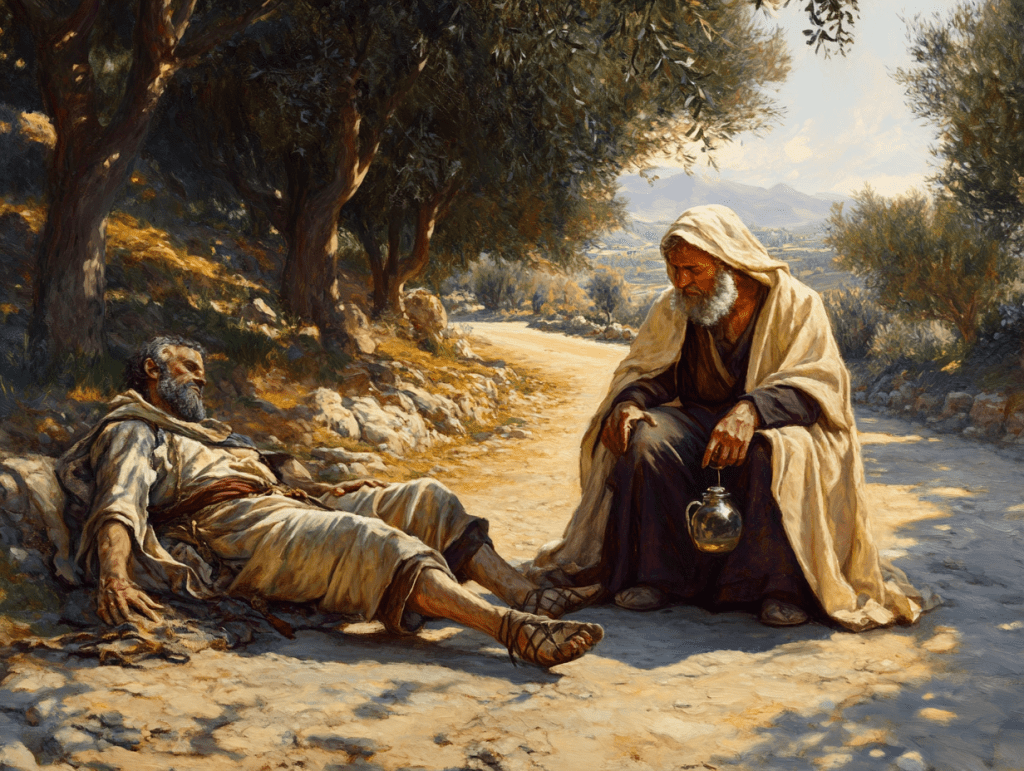
    In the 1st-century Judean setting of Luke 10, Jesus was teaching a crowd when a lawyer asked, “Teacher, what shall I do to inherit eternal life?” (Luke 10:25, ESV). Jesus pointed him to the law: love God and love your neighbor (Luke 10:27). When the lawyer asked, “And who is my neighbor?” (Luke 10:29), Jesus responded with the Parable of the Good Samaritan: A man traveling from Jerusalem to Jericho was attacked by robbers, left half-dead. A priest and a Levite passed by, but a Samaritan stopped, bandaged his wounds, and cared for him (Luke 10:30-35). In this context, Samaritans were despised by Jews due to historical and religious tensions (John 4:9), making the Samaritan’s compassion radical. Jesus concluded, “You go, and do likewise” (Luke 10:37, ESV), showing that love transcends boundaries and is the essence of Kingdom works. This aligns with Dual-Realm Dispensationalism, where love in the Kingdom of God now (Colossians 1:13) prepares us for the Kingdom of Heaven (Revelation 22:12). J. Dwight Pentecost writes, “The Good Samaritan exemplifies the love that marks Kingdom works, a love that endures the Bema Seat’s fire” (Things to Come, 1958, p. 145).1 The parable calls us to love our neighbor as a Spirit-led work, reflecting the Kingdom’s heart.

    The Samaritan’s Compassionate Works

    The Samaritan’s actions—bandaging wounds, providing oil and wine, and ensuring the man’s care—represent Spirit-led works of love that endure. On the Jericho road, a dangerous 17-mile stretch descending 3,000 feet from Jerusalem to Jericho, the Samaritan risked his safety to help a stranger. His compassion stood in stark contrast to the priest and Levite, who prioritized ritual purity over mercy. 1 Corinthians 13:13 declares, “So now faith, hope, and love abide, these three; but the greatest of these is love” (ESV). The Samaritan’s love was active, costly, and selfless, embodying the Spirit-led works that prepare us for the Kingdom of Heaven. In the 1st-century context, his actions were revolutionary, crossing cultural divides to show mercy. H.A. Ironside reflects, “The Samaritan’s love mirrors the heart of Christ, a love that acts without hesitation” (Luke, 1915, p. 89).2 His compassionate works challenge us to love actively, even when it’s inconvenient or costly, as a reflection of the Kingdom’s values.

    Practical Application: Loving in Action

    The Parable of the Good Samaritan calls us to love in action, showing compassion to those in need as a Spirit-led work. In our modern context, this means looking for opportunities to serve others, even when it’s inconvenient. Galatians 6:10 urges, “So then, as we have opportunity, let us do good to everyone, and especially to those who are of the household of faith” (ESV). Practically, this might look like helping a neighbor with groceries, offering a listening ear to a friend in distress, or supporting a local charity with your time or resources. For example, taking time to visit a sick relative or donating to a food bank can be acts of love that reflect the Kingdom’s heart. John Walvoord notes, “Love in action is the hallmark of Kingdom works, preparing us for eternal glory” (The Bible Knowledge Commentary, 1983, p. 234).3 Love in action—show compassion to others, building works that endure.

    More to Explore

    The Good Samaritan challenges us to love in action, reflecting the Kingdom’s heart. Our next post will explore readiness (Matthew 24:45-47) in the Kingdom of God now, preparing us for glory in the Kingdom of Heaven. Stay tuned—God’s Word holds treasures (2 Timothy 3:16), and for a deeper dive, look forward to Refined by Fire, a forthcoming book exploring these truths across 24 chapters, deepening your journey in the Kingdom of God and Heaven (Ephesians 2:10).

    Endnotes

    1. J. Dwight Pentecost, Things to Come (Grand Rapids: Zondervan, 1958), 142.
    2. H.A. Ironside, Expository Notes on the Gospel of Matthew (Neptune, NJ: Loizeaux Brothers, 1920), 146.
    3. Norman Geisler, Systematic Theology (Minneapolis: Bethany House, 2002), 683.

  • Uncovering the Hidden Treasure

    Introduction

    As we continue our journey through Refined by Fire, we’ve seen how faith transforms us, much like the leaven in the Kingdom of God (Post 8). Now, we return to Part 2: Spirit-Led Works in This Age, exploring how our works in the Kingdom of God now prepare us for the Kingdom of Heaven. The Parable of the Hidden Treasure (Matthew 13:44), another gem from Jesus’ teachings in Matthew 13, reveals the incomparable value of the Kingdom and the sacrificial works required to pursue it. This parable challenges us to prioritize the Kingdom above all else, giving everything to gain its eternal rewards. Let’s dive into this hidden treasure and discover how our Spirit-led works can reflect a heart fully devoted to God’s Kingdom.

    The Value of the Kingdom

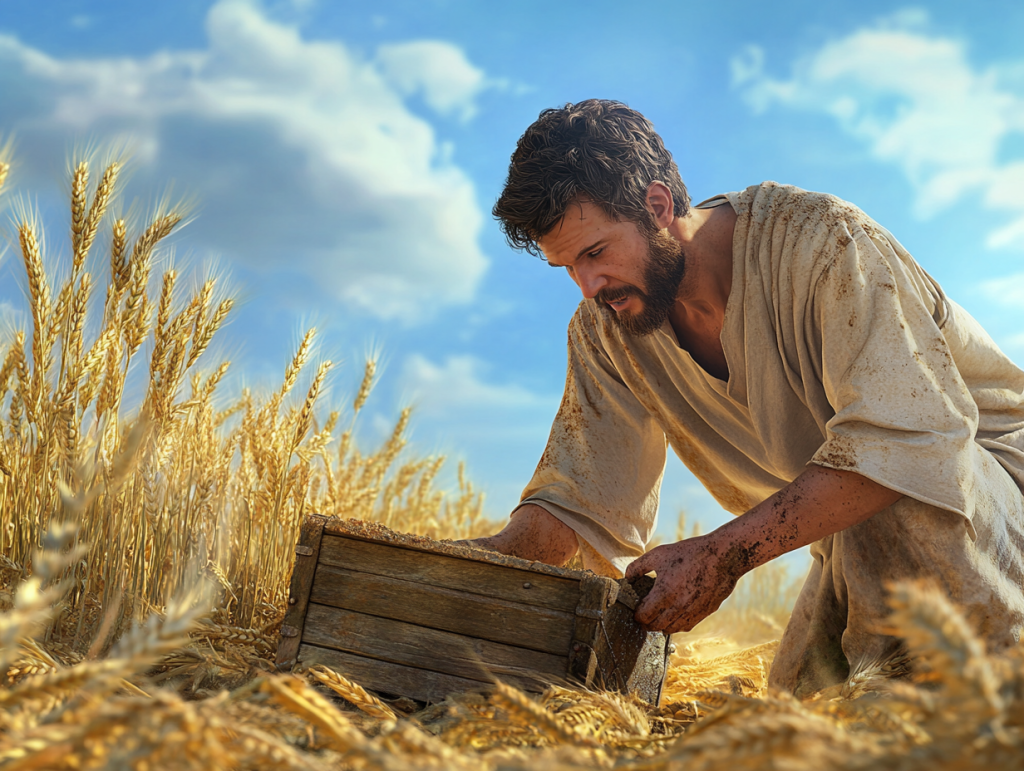
    In the 1st-century Galilean context of Matthew 13, Jesus taught the crowds by the Sea of Galilee, using parables to unveil the mysteries of the Kingdom (Matthew 13:2, “And great crowds gathered about him, so that he got into a boat and sat down”). The Parable of the Hidden Treasure is strikingly concise yet profound: “The kingdom of heaven is like treasure hidden in a field, which a man found and covered up. Then in his joy he goes and sells all that he has and buys that field” (Matthew 13:44, ESV). In this agrarian society, fields were often places where treasures—coins, jewelry, or family heirlooms—were buried for safekeeping, especially during times of war or upheaval. The man in the parable, likely a laborer or tenant farmer, stumbles upon such a treasure while working the land. Recognizing its immense value, he joyfully sells all he has to buy the field, securing the treasure for himself. Jesus uses this imagery to show the surpassing worth of the Kingdom of Heaven—it’s a treasure so valuable that it’s worth giving up everything to obtain. This aligns with Dual-Realm Dispensationalism, where our works in the Kingdom of God now (Colossians 1:13) prepare us for the eternal rewards of the Kingdom of Heaven (Revelation 22:12). J. Dwight Pentecost writes, “The Kingdom of Heaven is a treasure worth more than all earthly possessions, a prize that demands our all” (Things to Come, 1958, p. 142).1 The parable calls us to recognize the Kingdom’s value and pursue it with wholehearted devotion.

    The Man’s Joyful Sacrifice

    The man in the parable represents the believer who discovers the Kingdom’s worth and responds with joyful sacrifice. His actions—selling all he has to buy the field—reflect a radical commitment to the Kingdom, driven not by obligation but by joy. In 1st-century Galilee, selling all one’s possessions was a significant act, often leaving a person with nothing but the field they purchased. Yet the man does so “in his joy”, showing that the treasure’s value far outweighs the cost. This mirrors the Spirit-led works we’re called to in the Kingdom of God now—works of sacrifice, service, and devotion that prepare us for the Kingdom of Heaven. Matthew 6:33 instructs us, “But seek first the kingdom of God and his righteousness, and all these things will be added to you” (ESV). The man’s joyful sacrifice challenges us to prioritize the Kingdom above all else, trusting that God will provide for our needs. H.A. Ironside notes, “The joy of the Kingdom’s discovery leads to a willing surrender of all, for its value is eternal” (Matthew, 1920, p. 146).2 Like the man, we’re called to let the Spirit guide our works, sacrificing earthly comforts for the eternal treasure of the Kingdom.

    Practical Application: Seeking the Kingdom Through Works

    The Parable of the Hidden Treasure calls us to seek the Kingdom through Spirit-led works, prioritizing its eternal value above all else. In our modern context, this means reorienting our lives—our time, resources, and priorities—around the Kingdom. Philippians 3:8 captures this mindset: “Indeed, I count everything as loss because of the surpassing worth of knowing Christ Jesus my Lord” (ESV). Practically, this might look like giving generously to support a ministry, even when it stretches your budget, or dedicating time to serve others, even when it means sacrificing personal comfort. For example, volunteering at a local shelter or mentoring a young believer can be acts of joyful sacrifice, reflecting a heart that values the Kingdom above all. Norman Geisler writes, “The Kingdom’s worth demands our all, for its rewards are eternal” (Systematic Theology, 2002, p. 683).3 Seek the treasure—prioritize the Kingdom, sacrificing all for its eternal value.

    More to Explore

    The Hidden Treasure challenges us to seek the Kingdom through sacrificial works. Our next post will explore how love (Luke 10:25-37) in the Kingdom of God now leads to glory in the Kingdom of Heaven, followed by a focus on readiness (Matthew 24:45-47). Stay tuned—God’s Word holds treasures (2 Timothy 3:16), and for a deeper dive, look forward to Refined by Fire, a forthcoming book exploring these truths across 24 chapters, deepening your journey in the Kingdom of God and Heaven (Ephesians 2:10).

    Endnotes

    1. J. Dwight Pentecost, Things to Come (Grand Rapids: Zondervan, 1958), 142.
    2. H.A. Ironside, Expository Notes on the Gospel of Matthew (Neptune, NJ: Loizeaux Brothers, 1920), 146.
    3. Norman Geisler, Systematic Theology (Minneapolis: Bethany House, 2002), 683.

  • The Leaven: Hidden Influence

    The Leaven: Hidden Influence

    In our journey through Refined by Fire, we’ve explored the foundational role of faith in entering the Kingdom of God, as seen in parables like the Sower and the Mustard Seed (Posts 3 and 7). Now, as we revisit Part 1: Faith and the Kingdom of God, we turn to the Parable of the Leaven (Matthew 13:33), a subtle yet powerful illustration of the Kingdom’s transformative influence through faith. This parable, part of Jesus’ teachings in Matthew 13, reveals how the Kingdom of God works quietly but pervasively in the hearts of believers, shaping lives for eternity. Let’s unpack this hidden truth and discover how our faith can influence every part of our lives for God’s glory.

    The Transformative Power of the Kingdom

    In the 1st-century Galilean setting of Matthew 13, Jesus taught the crowds by the Sea of Galilee, using parables to reveal the mysteries of the Kingdom (Matthew 13:2, “And great crowds gathered about him, so that he got into a boat and sat down”). The Parable of the Leaven, though brief, carries profound meaning: “The kingdom of heaven is like leaven that a woman took and hid in three measures of flour, till it was all leavened” (Matthew 13:33, ESV). In this cultural context, leaven (yeast) was a common household item, used to make bread rise, but it worked slowly and invisibly, transforming the dough over time. Jesus uses this imagery to show how the Kingdom of God, through faith, permeates a believer’s life, quietly but powerfully changing them from within. The “three measures of flour” likely allude to a large quantity (about 50 pounds), emphasizing the Kingdom’s expansive influence—starting small but affecting everything. Arnold Fruchtenbaum notes, “The leaven represents the Kingdom’s subtle yet pervasive growth, a mystery hidden until revealed through Christ” (Israelology, 1994, p. 623).1 This aligns with Dual-Realm Dispensationalism, where the Kingdom of God operates now through faith (Colossians 1:13), preparing us for the Kingdom of Heaven (Revelation 20:6). The parable calls us to let faith transform every part of our lives, just as leaven transforms the dough.

    The Woman’s Hidden Work

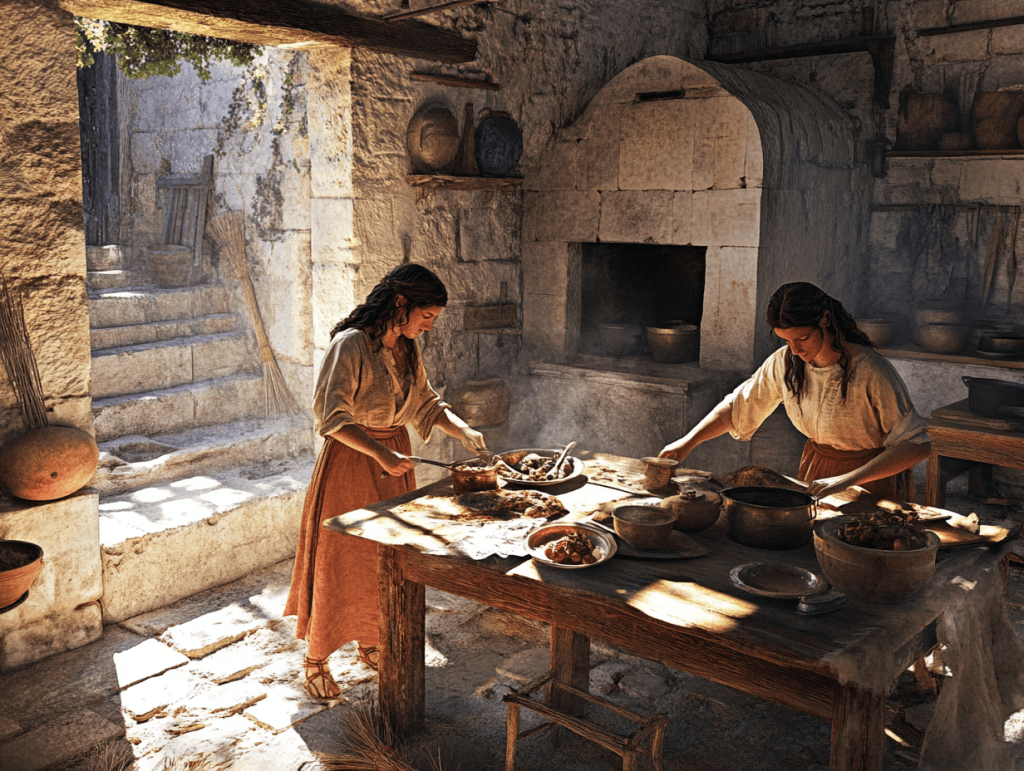
    The woman in the parable, a 1st-century Galilean homemaker, represents the believer who receives the Kingdom’s influence through faith. Her act of hiding the leaven in the flour mirrors how faith often works quietly—through prayer, obedience, and trust in God’s Word—yet its impact is profound. In Galilee, where Jesus taught, daily life revolved around such tasks as baking bread, a process familiar to His audience. The woman’s work was not flashy but essential, much like the Spirit’s sanctifying work in us. John 4:24 reminds us, “God is spirit, and those who worship him must worship in spirit and truth” (ESV). Just as the leaven permeated the dough, our faith, empowered by the Spirit, should permeate our thoughts, actions, and relationships, transforming us into vessels for God’s glory. H.A. Ironside reflects, “The leaven of the Kingdom works silently, but its influence is unstoppable, shaping lives for eternity” (Matthew, 1920, p. 145).2 The woman’s hidden work challenges us to let faith influence every corner of our lives, even the unseen places.

    Practical Application: Transforming Through Faith

    The Parable of the Leaven calls us to let faith transform every aspect of our lives, just as leaven transforms the dough. In our modern context, this means allowing the Kingdom’s influence to shape our daily choices—how we treat others, how we steward our time, and how we worship. Galatians 5:22-23 describes the fruit of the Spirit: “But the fruit of the Spirit is love, joy, peace, patience, kindness, goodness, faithfulness, gentleness, self-control” (ESV). By cultivating these qualities through faith, we become agents of the Kingdom’s transformative power in our families, workplaces, and communities. For example, a kind word to a struggling coworker or a patient response in a tense situation can reflect the Kingdom’s influence, quietly transforming relationships. John Walvoord notes, “The Kingdom’s growth through faith is a mystery, but its impact is undeniable, shaping believers for eternity” (The Bible Knowledge Commentary, 1983, p. 48).3 Transform through faith—let your faith influence every part of your life, reflecting the Kingdom’s power.

    More to Explore

    The Leaven challenges us to let faith transform every part of our lives. Upcoming posts will explore how love (Luke 10:25-37) and readiness (Matthew 24:45-47) in the Kingdom of God now lead to glory in the Kingdom of Heaven. Stay tuned—God’s Word holds treasures (2 Timothy 3:16), and for a deeper dive, look forward to Refined by Fire, a forthcoming book exploring these truths across 24 chapters, deepening your journey in the Kingdom of God and Heaven (Ephesians 2:10).

    Endnotes

    1. Arnold Fruchtenbaum, Israelology: The Missing Link in Systematic Theology (Tustin, CA: Ariel Ministries, 1994), 623.
    2. H.A. Ironside, Expository Notes on the Gospel of Matthew (Neptune, NJ: Loizeaux Brothers, 1920), 145.
    3. John Walvoord, The Bible Knowledge Commentary: New Testament (Wheaton, IL: Victor Books, 1983), 48.

  • The Mustard Seed: Kingdom Growth

    A Seed in Galilee

    In a Galilean field near Capernaum, a farmer held a tiny mustard seed, barely noticeable in his palm (Matthew 13:31, “The kingdom of heaven is like a grain of mustard seed that a man took and sowed in his field”). The rolling hills, dotted with wildflowers as described by ancient travelers like Josephus (Wars of the Jews, Book 3), framed this scene—a humble setting for Jesus’ teaching. Yet, this seed’s potential revealed human doubt: small beginnings often seem insignificant. Christ’s parable offers hope through growth. Dual-Realm Dispensationalism unveils this Sod (סוֹד, Strong’s H5475: hidden secret), showing how faith in the Kingdom of God now (Colossians 1:13, “transferred us to the kingdom of his beloved Son”) grows into the expansive Kingdom of Heaven (Revelation 20:6). Charles Ryrie writes, “The Mustard Seed illustrates the kingdom’s growth from humble origins to global impact” (Dispensationalism, 2007, p. 145). Trust humbly—small faith yields great growth.

    The Seed’s Growth

    The mustard seed, though “the smallest of all seeds”, grew into a plant so large that “the birds of the air come and make nests in its branches” (Matthew 13:32). Botanists note the black mustard plant (Brassica nigra), common in Judea, can grow 10-12 feet, towering over other herbs. This growth mirrors the Kingdom of Heaven’s expansion—from a small band of disciples to a global faith (Acts 1:8, “you will be my witnesses… to the end of the earth”). The kingdom begins in the heart (John 3:3, “unless one is born again he cannot see the kingdom of God”), but its fruit reaches far (Matthew 5:16, “let your light shine before others”). David Guzik reflects, “The kingdom grows through faithful witness, small acts compounding into eternity” (Matthew Commentary, 2013, p. 56). Grow steadily—your faith expands God’s kingdom.

    The Kingdom of God Now

    The Kingdom of God, accessed by faith (Ephesians 2:8-9, “by grace you have been saved through faith”), starts small but grows through Spirit-led works (Colossians 1:10, “bearing fruit in every good work”). The mustard seed’s growth reflects this—believers, rooted in the Kingdom of God now, bear fruit that prepares for the Kingdom of Heaven (Revelation 20:6, “they will reign with him for a thousand years”). The birds nesting symbolize the kingdom’s reach, offering shelter to all (Isaiah 11:9, “the earth shall be full of the knowledge of the Lord”). Shine brightly—your faith, though small, can shelter many.

    The Centurion’s Seed of Faith

    A centurion in Capernaum planted a small seed of faith (Matthew 8:5-13). He sought Jesus to heal his servant, saying, “Lord… only say the word, and my servant will be healed” (Matthew 8:8). Jesus marveled, “with no one in Israel have I found such faith” (Matthew 8:10), and the servant was healed. Chuck Smith observes, “His faith, though small, grew into a testimony of God’s power” (The Gospel of Matthew, 1982, p. 45). This seed of faith entered the Kingdom of God (John 3:16, “whoever believes in him should not perish”), a model for growth. Believe simply—your small faith can grow mighty.

    Hope for the Kingdom of Heaven

    The mustard plant’s growth foreshadows the Kingdom of Heaven, where Christ’s reign brings global glory (Revelation 20:4). The Rapture marks this transition (1 Thessalonians 4:17, “caught up… to meet the Lord in the air”), leading to the millennial kingdom where believers reign (Revelation 20:6). John MacArthur writes, “The kingdom’s growth culminates in Christ’s return, a hope for every believer” (The MacArthur New Testament Commentary: Matthew, 1989, p. 347). This hope inspires us to plant seeds now, ensuring rewards later. Hope confidently—your faith today grows into eternity.

    More to Explore

    The Mustard Seed challenges us—are we planting seeds of faith? Upcoming posts will explore how love (Luke 10:25-37) and readiness (Matthew 24:45-47) in the Kingdom of God now lead to glory in the Kingdom of Heaven. Stay tuned—God’s Word holds treasures (2 Timothy 3:16), and for a deeper dive, look forward to Refined by Fire, a forthcoming book exploring these truths across 24 chapters, deepening your journey in the Kingdom of God and Heaven (Ephesians 2:10).

  • The Pearl of Great Price: Hope of Glory

    A Merchant by the Sea

    Along the Mediterranean coast, a merchant sifted through treasures, his eyes fixed on a single pearl (Matthew 13:45, “the kingdom of heaven is like a merchant in search of fine pearls”). The salty breeze of Tyre, as described by ancient sources like Strabo (Geography, Book 16), carried the sound of waves crashing against the shore, a vivid setting for Jesus’ parable. Yet, this merchant’s quest revealed human failure—pursuing wealth over eternal value. Christ’s teaching offers hope through sacrifice. Dual-Realm Dispensationalism unveils this Sod (סוֹד, Strong’s H5475: hidden secret), showing how seeking the Kingdom of God now (Colossians 1:13, “transferred us to the kingdom of his beloved Son”) prepares us for the Kingdom of Heaven’s glory (Revelation 20:6). Tim LaHaye writes, “The Pearl signifies the priceless value of salvation, pursued with all one’s heart” (Revelation Unveiled, 1999, p. 123). Seek earnestly—your pursuit shapes your eternal hope.

    The Merchant’s Quest

    The merchant sold all he had to buy one pearl (Matthew 13:46). This pearl, rare and costly, symbolized the Kingdom of Heaven—a treasure worth everything (Matthew 13:44). Jesus taught that true value lies in giving up the temporal for the eternal (Luke 12:33, “sell your possessions, and give to the needy”). The merchant’s sacrifice mirrors the believer’s faith, entering the Kingdom of God now (John 3:3, “unless one is born again he cannot see the kingdom of God”), with hope of reigning later (Revelation 20:4, “they came to life and reigned with Christ”). David Jeremiah notes, “The Pearl calls us to prioritize eternal riches over worldly gain” (The Handwriting on the Wall, 1992, p. 89). Value highly—let your heart chase God’s kingdom.

    The Kingdom of God Now

    The Kingdom of God, a spiritual realm accessed by faith (Ephesians 2:8-9, “by grace you have been saved through faith”), demands total commitment. The merchant’s sacrifice reflects this—selling all to gain the pearl mirrors surrendering to Christ (Philippians 3:8, “I count everything as loss because of the surpassing worth of knowing Christ”). This kingdom, lived now through the Holy Spirit (Romans 14:17, “righteousness and peace and joy”), prepares us for the Kingdom of Heaven’s rewards (Matthew 25:21, “Well done, good and faithful servant”). Commit fully—let your life reflect the pearl’s worth.

    The Rich Young Ruler

    A rich young ruler sought eternal life (Matthew 19:16-22), but when Jesus said, “Go, sell what you possess and give to the poor… and come, follow me” (Matthew 19:21), he walked away sad (Matthew 19:22). His wealth was his tares, choking faith (Matthew 13:22). Skip Heitzig reflects, “The ruler’s refusal shows the cost of discipleship—choosing Christ over all” (The Gospel of John, 2007, p. 67). Unlike the merchant, he missed the Kingdom of God (Mark 10:25, “it is easier for a camel to go through the eye of a needle”). Choose wisely—let go of what hinders your pursuit.

    Hope for the Kingdom of Heaven

    The pearl foreshadows the Kingdom of Heaven, where overcomers inherit glory (Revelation 21:21, “the twelve gates were twelve pearls”). The merchant’s sacrifice prefigures the Rapture’s call (1 Thessalonians 4:17, “caught up… to meet the Lord”), separating the Church Age from the millennial reign (Revelation 20:6). John MacArthur writes, “The Pearl points to the eternal value of a life surrendered to Christ” (The MacArthur New Testament Commentary: Matthew, 1989, p. 345). This hope drives us to seek God now, ensuring rewards later. Hope boldly—your pursuit today secures your crown tomorrow.

    More to Explore

    The Pearl challenges us—are we seeking God’s kingdom above all? Upcoming posts will explore how love (Luke 10:25-37) and readiness (Matthew 24:45-47) in the Kingdom of God now lead to glory in the Kingdom of Heaven. Stay tuned—God’s Word holds treasures (2 Timothy 3:16), and for a deeper dive, look forward to Refined by Fire, a forthcoming book exploring these truths across 24 chapters, deepening your journey in the Kingdom of God and Heaven (Ephesians 2:10).

  • The Wheat and Tares: Judgment’s Preview

    A Field in Judea

    In a sunlit Judean field, wheat and tares grew side by side, their roots entwined beneath the soil (Matthew 13:24, “The kingdom of heaven may be compared to a man who sowed good seed in his field”). The rolling hills of Judea, dotted with olive groves as noted by Josephus (Antiquities of the Jews, Book 15), framed this scene—a fitting setting for Jesus’ teaching near Capernaum. Yet, an enemy sowed tares, revealing human failure to discern good from evil. Christ’s parable offers hope through judgment. Dual-Realm Dispensationalism unveils this Sod (סוֹד, Strong’s H5475: hidden secret), linking works in the Kingdom of God now (Colossians 1:13, “transferred us to the kingdom of his beloved Son”) to the Judgment Seat of Christ (1 Corinthians 3:13), shaping our role in the Kingdom of Heaven (Revelation 20:6). John Walvoord writes, “The Wheat and Tares preview the separation of true and false at the end of the age” (Matthew: Thy Kingdom Come, 1974, p. 98). Discern wisely—your works face God’s fire.

    The Sower and the Enemy

    The sower planted good seed, but an enemy sowed tares (Matthew 13:25). When the plants grew, servants asked, “Did you not sow good seed in your field?” (Matthew 13:27). The master replied, “An enemy has done this… let both grow together until the harvest” (Matthew 13:28-30). The harvest separates wheat (righteous) from tares (wicked), reflecting the Bema Seat (1 Corinthians 3:12-15, “the fire will test what sort of work each one has done”). David Guzik notes, “The tares mimic wheat, but their fruit reveals their nature at judgment” (Matthew Commentary, 2013, p. 54). This parable warns that works in the Kingdom of God now determine rewards in the Kingdom of Heaven later. Work faithfully—bear fruit that endures.

    The Kingdom of God Now

    The Kingdom of God, accessed by faith (Ephesians 2:8-9, “by grace you have been saved through faith”), calls believers to works reflecting Christ (Colossians 1:10, “bearing fruit in every good work”). The wheat symbolizes Spirit-led works—gold, silver, precious stones—that endure (1 Corinthians 3:12). The tares, works of the flesh, perish (Matthew 13:30, “gather the weeds… to be burned”). Fruchtenbaum teaches, “Works reveal the heart—only Spirit-led deeds survive God’s judgment” (Israelology, 1989, p. 456). Live righteously—let your works shine as wheat in God’s harvest.

    The Faithful Servants

    Two servants in a Judean household exemplified enduring works (Matthew 24:45-47). The faithful servant, tasked with feeding others, was diligent, earning, “Blessed is that servant… he will set him over all his possessions” (Matthew 24:46-47). Chuck Smith reflects, “Faithful service in small things leads to greater reward” (The Gospel of Matthew, 1982, p. 134). Their works, like the wheat, endure (1 Corinthians 3:14, “if the work… survives, he will receive a reward”). Serve diligently—your faithfulness now shapes your eternity.

    Preparing for the Bema Seat

    The harvest points to the Bema Seat, where works are judged (2 Corinthians 5:10, “we must all appear before the judgment seat of Christ”). Wheat endures, tares burn—Spirit-led works gain reward (1 Corinthians 3:14), while fleshly works face loss (1 Corinthians 3:15, “he will suffer loss, though he himself will be saved”). Tim LaHaye writes, “The Bema Seat evaluates our works, not our salvation, for the Kingdom of Heaven” (The Rapture, 2002, p. 89). This prepares us for reigning with Christ (Revelation 20:4). Prepare now—let your works be wheat, not tares.

    More to Explore

    The Wheat and Tares challenge us—are our works wheat or tares? Upcoming posts will explore how love (Luke 10:25-37) and perseverance (Hebrews 12:1) in the Kingdom of God now secure our place in the Kingdom of Heaven. Stay tuned—God’s Word holds treasures (2 Timothy 3:16), and for a deeper dive, look forward to Refined by Fire, a forthcoming book exploring these truths across 24 chapters, deepening your journey in the Kingdom of God and Heaven (Ephesians 2:10).

  • The Talents: Works That Endure

    A Servant in Judea

    In the bustling markets of Judea, a servant handled talents—large sums of silver—under the watchful eye of his master (Matthew 25:14, “a man going on a journey… entrusted to his servants”). Jerusalem’s streets echoed with trade, its stone walls reflecting the economic pulse of the region, as recorded by Josephus (Antiquities of the Jews, Book 18). Yet, this servant faced a choice: invest or hide. Human failure to act reveals fear or laziness, but Christ’s parable offers redemption through faithful stewardship. Dual-Realm Dispensationalism uncovers this Sod (סוֹד, Strong’s H5475: hidden secret), linking works in the Kingdom of God now (Colossians 1:13, “transferred us to the kingdom of his beloved Son”) to rewards in the Kingdom of Heaven later (Revelation 20:6). J. Dwight Pentecost writes, “The Talents teach that faithfulness today determines eternal gain” (Things to Come, 1958, p. 234). Steward well—your works matter for eternity.

    The Master’s Trust

    The master entrusted talents to three servants, each according to ability (Matthew 25:15). Two traded wisely, doubling their sums (Matthew 25:16-17), while the third buried his, fearing loss (Matthew 25:18). The faithful heard, “Well done, good and faithful servant… enter into the joy of your master” (Matthew 25:21), but the unfaithful faced, “cast the worthless servant into the outer darkness” (Matthew 25:30). This reflects the Judgment Seat of Christ (1 Corinthians 3:12-15), where Spirit-led works (gold, silver, precious stones) endure, while fleshly works (wood, hay, stubble) perish. John Walvoord notes, “The talents symbolize the responsibilities given to believers, judged for their faithfulness” (The Bible Knowledge Commentary, 1983, p. 77). Invest boldly—use your gifts for God’s glory.

    Works in the Kingdom of God

    The Kingdom of God, a spiritual realm accessed by faith (Ephesians 2:8-9, “by grace you have been saved through faith”), calls believers to works that reflect Christ (Colossians 1:10, “bearing fruit in every good work”). The two faithful servants’ efforts mirror this—Spirit-led labor in the Church Age prepares us for the Kingdom of Heaven (Matthew 25:21). Fruchtenbaum teaches, “Works flow from salvation, not toward it, shaping our eternal role” (Israelology, 1989, p. 456). These works, empowered by the Holy Spirit (Galatians 5:22-23, “love, joy, peace”), endure God’s fire (1 Corinthians 3:13), securing rewards. Serve diligently—let your actions honor God today.

    The Widow’s Offering

    A widow in Jerusalem exemplified enduring works (Mark 12:41-44). She gave two small coins, “all she had to live on” (Mark 12:44), out of love and faith. Jesus praised her, contrasting her sacrifice with the rich’s show (Mark 12:43). Greg Laurie reflects, “Her offering was a work of the heart, pleasing to God beyond measure” (The Gospel of Mark, 2017, p. 102). This aligns with the Talents—small acts, when Spirit-led, build eternal treasure (Matthew 6:20, “lay up for yourselves treasures in heaven”). Give generously—your faithfulness echoes hers.

    Preparing for the Bema Seat

    The Talents point to the Bema Seat, where works are judged (2 Corinthians 5:10, “we must all appear before the judgment seat of Christ”). The faithful servants’ gains reflect gold and silver (1 Corinthians 3:12), earning, “you have been faithful over a little… over much” (Matthew 25:23). The unfaithful’s loss mirrors wood and stubble, facing outer darkness—a loss of reward, not salvation (Matthew 25:30). Tim LaHaye writes, “The Bema Seat separates the saved by faith from the rewarded by works” (The Rapture, 2002, p. 89). This prepares us for the Kingdom of Heaven (Revelation 20:4), where overcomers reign. Prepare now—your works today shape your tomorrow.

    More to Explore

    The Talents challenge us to steward our gifts—are we investing for eternity? Upcoming posts will explore how love (Matthew 22:37-39) and perseverance (Hebrews 12:1) in the Kingdom of God now secure our place in the Kingdom of Heaven. Stay tuned—God’s Word holds treasures (2 Timothy 3:16).