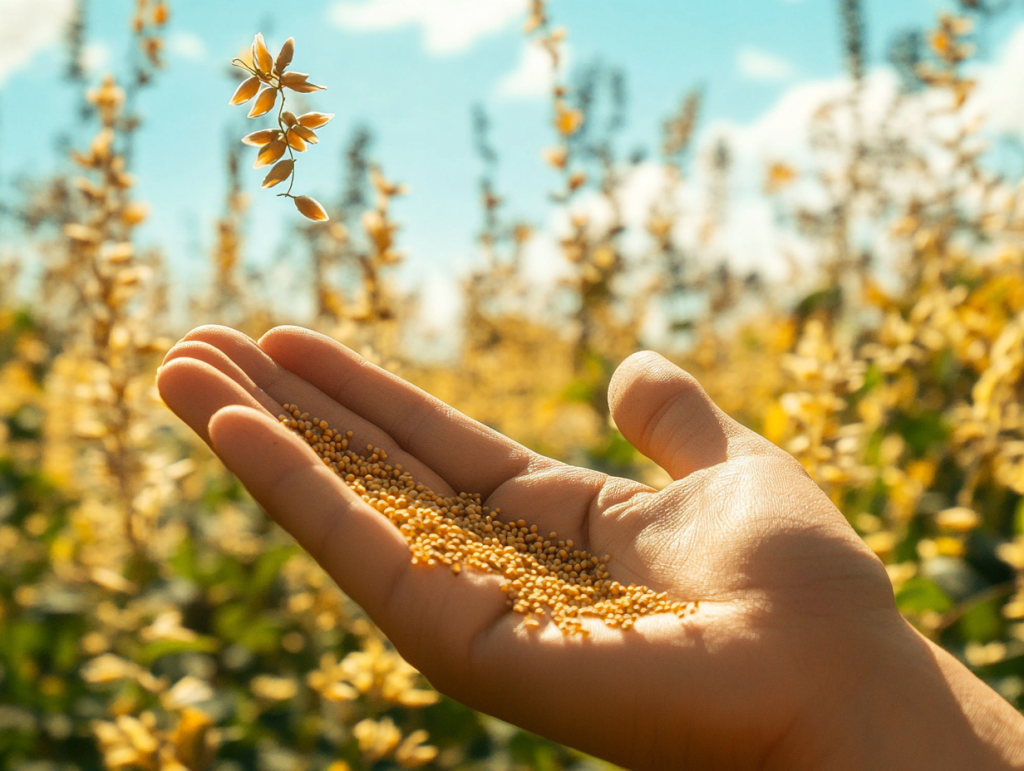
A Seed in Galilee
In a Galilean field near Capernaum, a farmer held a tiny mustard seed, barely noticeable in his palm (Matthew 13:31, “The kingdom of heaven is like a grain of mustard seed that a man took and sowed in his field”). The rolling hills, dotted with wildflowers as described by ancient travelers like Josephus (Wars of the Jews, Book 3), framed this scene—a humble setting for Jesus’ teaching. Yet, this seed’s potential revealed human doubt: small beginnings often seem insignificant. Christ’s parable offers hope through growth. Dual-Realm Dispensationalism unveils this Sod (סוֹד, Strong’s H5475: hidden secret), showing how faith in the Kingdom of God now (Colossians 1:13, “transferred us to the kingdom of his beloved Son”) grows into the expansive Kingdom of Heaven (Revelation 20:6). Charles Ryrie writes, “The Mustard Seed illustrates the kingdom’s growth from humble origins to global impact” (Dispensationalism, 2007, p. 145). Trust humbly—small faith yields great growth.
The Seed’s Growth
The mustard seed, though “the smallest of all seeds”, grew into a plant so large that “the birds of the air come and make nests in its branches” (Matthew 13:32). Botanists note the black mustard plant (Brassica nigra), common in Judea, can grow 10-12 feet, towering over other herbs. This growth mirrors the Kingdom of Heaven’s expansion—from a small band of disciples to a global faith (Acts 1:8, “you will be my witnesses… to the end of the earth”). The kingdom begins in the heart (John 3:3, “unless one is born again he cannot see the kingdom of God”), but its fruit reaches far (Matthew 5:16, “let your light shine before others”). David Guzik reflects, “The kingdom grows through faithful witness, small acts compounding into eternity” (Matthew Commentary, 2013, p. 56). Grow steadily—your faith expands God’s kingdom.
The Kingdom of God Now
The Kingdom of God, accessed by faith (Ephesians 2:8-9, “by grace you have been saved through faith”), starts small but grows through Spirit-led works (Colossians 1:10, “bearing fruit in every good work”). The mustard seed’s growth reflects this—believers, rooted in the Kingdom of God now, bear fruit that prepares for the Kingdom of Heaven (Revelation 20:6, “they will reign with him for a thousand years”). The birds nesting symbolize the kingdom’s reach, offering shelter to all (Isaiah 11:9, “the earth shall be full of the knowledge of the Lord”). Shine brightly—your faith, though small, can shelter many.
The Centurion’s Seed of Faith
A centurion in Capernaum planted a small seed of faith (Matthew 8:5-13). He sought Jesus to heal his servant, saying, “Lord… only say the word, and my servant will be healed” (Matthew 8:8). Jesus marveled, “with no one in Israel have I found such faith” (Matthew 8:10), and the servant was healed. Chuck Smith observes, “His faith, though small, grew into a testimony of God’s power” (The Gospel of Matthew, 1982, p. 45). This seed of faith entered the Kingdom of God (John 3:16, “whoever believes in him should not perish”), a model for growth. Believe simply—your small faith can grow mighty.
Hope for the Kingdom of Heaven
The mustard plant’s growth foreshadows the Kingdom of Heaven, where Christ’s reign brings global glory (Revelation 20:4). The Rapture marks this transition (1 Thessalonians 4:17, “caught up… to meet the Lord in the air”), leading to the millennial kingdom where believers reign (Revelation 20:6). John MacArthur writes, “The kingdom’s growth culminates in Christ’s return, a hope for every believer” (The MacArthur New Testament Commentary: Matthew, 1989, p. 347). This hope inspires us to plant seeds now, ensuring rewards later. Hope confidently—your faith today grows into eternity.
More to Explore
The Mustard Seed challenges us—are we planting seeds of faith? Upcoming posts will explore how love (Luke 10:25-37) and readiness (Matthew 24:45-47) in the Kingdom of God now lead to glory in the Kingdom of Heaven. Stay tuned—God’s Word holds treasures (2 Timothy 3:16), and for a deeper dive, look forward to Refined by Fire, a forthcoming book exploring these truths across 24 chapters, deepening your journey in the Kingdom of God and Heaven (Ephesians 2:10).
 Refined By Fire