Introduction
Our journey through Refined by Fire has revealed the transformative power of faith (Post 8), the sacrificial works of seeking the Kingdom (Post 9), and the call to love in action (Post 10). Now, we return to Part 3: Judgment at the Bema Seat, focusing on readiness for judgment through faithful service. The Parable of the Faithful Servants (Matthew 24:45-51), part of Jesus’ Olivet Discourse, emphasizes the importance of being prepared for the Master’s return, a lesson that prepares us for the Bema Seat’s evaluation of our works. This parable challenges us to live diligently in the Kingdom of God now, ensuring our works endure the fire of judgment and lead to glory in the Kingdom of Heaven. Let’s explore this call to readiness and learn how to serve faithfully as we await Christ’s return.
The Call to Faithful Service
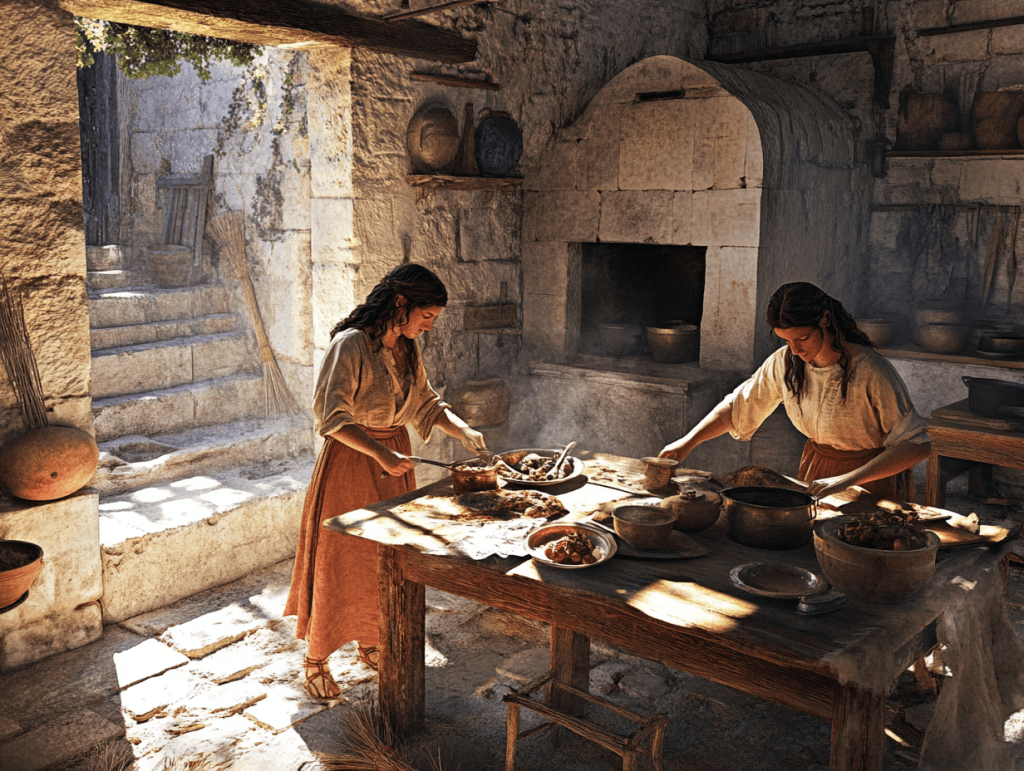
In the 1st-century Judean setting of Matthew 24, Jesus taught His disciples on the Mount of Olives, answering their questions about the end times (Matthew 24:3, “Tell us, when will these things be, and what will be the sign of your coming and of the end of the age?”). In the Parable of the Faithful Servants, Jesus said, “Who then is the faithful and wise servant, whom his master has set over his household, to give them their food at the proper time? Blessed is that servant whom his master will find so doing when he comes” (Matthew 24:45-46, ESV). In this context, households often had servants responsible for managing daily tasks, such as providing food for the family. The faithful servant diligently fulfills his duties, knowing the master could return at any moment. Jesus contrasts this with the wicked servant, who abuses his authority and is unprepared for the master’s return, facing judgment (Matthew 24:48-51). This parable points to the Bema Seat, where our works in the Kingdom of God now (Colossians 1:13) will be evaluated (2 Corinthians 5:10), determining our rewards in the Kingdom of Heaven (Revelation 22:12). J. Dwight Pentecost writes, “The faithful servant’s readiness reflects a heart prepared for the Bema Seat, where works are tested” (Things to Come, 1958, p. 148).1 The parable calls us to serve faithfully, always ready for Christ’s return.
The Servant’s Diligent Work
The faithful servant’s diligence—providing food at the proper time—represents the Spirit-led works we’re called to in the Kingdom of God now. In a 1st-century Judean household, this task was critical, ensuring the family’s well-being, and required constant vigilance. The servant’s readiness reflects a heart aligned with the Master’s will, prepared for His return. 1 Peter 4:10 instructs, “As each has received a gift, use it to serve one another, as good stewards of God’s varied grace” (ESV). The faithful servant’s diligence contrasts with the wicked servant’s negligence, showing that readiness for judgment requires consistent, faithful service. At the Bema Seat, our works will be tested (2 Corinthians 5:10), and only those done in the Spirit will endure. H.A. Ironside notes, “The faithful servant’s diligence ensures a reward, while negligence leads to loss” (Matthew, 1920, p. 298).2 The servant’s diligent work challenges us to serve faithfully in all we do, preparing for the Master’s return with a heart of readiness.
Practical Application: Serving with Readiness
The Parable of the Faithful Servants calls us to serve with readiness, ensuring our works in the Kingdom of God now are faithful and enduring. In our modern context, this means living with an eternal perspective, serving diligently in whatever role God has placed us. Titus 2:7 urges, “Show yourself in all respects to be a model of good works, and in your teaching show integrity, dignity” (ESV). Practically, this might look like faithfully fulfilling your responsibilities at work, even when no one is watching, or serving in your church with consistency, whether through teaching, hospitality, or prayer. For example, preparing a meal for a family in need or regularly praying for your community can be acts of faithful service, reflecting readiness for Christ’s return. John Walvoord writes, “Readiness for the Bema Seat requires diligent service, ensuring our works endure the fire” (The Bible Knowledge Commentary, 1983, p. 78).3 Be faithful—serve diligently, preparing for the Bema Seat’s judgment.
More to Explore
The Faithful Servants challenge us to serve with readiness, preparing for the Bema Seat. Our next post will explore how Spirit-led works lead to eternal rewards (1 Corinthians 3:14), concluding our initial series with a focus on glory in the Kingdom of Heaven. Stay tuned—God’s Word holds treasures (2 Timothy 3:16), and for a deeper dive, look forward to Refined by Fire, a forthcoming book exploring these truths across 24 chapters, deepening your journey in the Kingdom of God and Heaven (Ephesians 2:10).
Endnotes
- J. Dwight Pentecost, Things to Come (Grand Rapids: Zondervan, 1958), 148.
- H.A. Ironside, Expository Notes on the Gospel of Matthew (Neptune, NJ: Loizeaux Brothers, 1920), 298.
- John Walvoord, The Bible Knowledge Commentary: New Testament (Wheaton, IL: Victor Books, 1983), 78.

 Refined By Fire