Tag: Dual Realms

  • Building for Eternity: The Reward of Spirit-Led Works

    Introduction

    Our journey through Refined by Fire has revealed the transformative power of faith (Post 8), the sacrificial works of seeking the Kingdom (Post 9), the call to love in action (Post 10), and the readiness required for judgment (Post 11). Now, we conclude our initial series in Part 3: Judgment at the Bema Seat, reflecting on Chapter 18’s theme of eternal rewards for Spirit-led works. The Parable of the Faithful Servants taught us to be ready for the Master’s return, but what awaits those who serve faithfully? 1 Corinthians 3:14 promises, “If the work that anyone has built on the foundation survives, he will receive a reward” (ESV). This truth prepares us for the Bema Seat, where our works in the Kingdom of God now will determine our rewards in the Kingdom of Heaven. Let’s explore this promise through Stephen’s faithful witness and learn how to build for eternity.

    The Reward of Spirit-Led Works

    In the 1st-century Corinthian context of 1 Corinthians 3, Paul wrote to a church struggling with divisions and fleshly works (1 Corinthians 1:11), urging them to build on the foundation of Christ with works of gold, silver, and precious stones (1 Corinthians 3:12). He warned that their works would be tested by fire at the Bema Seat, but “if the work that anyone has built on the foundation survives, he will receive a reward” (1 Corinthians 3:14, ESV). In this Greco-Roman city, known for the Isthmian Games where athletes competed for perishable laurel crowns, Paul contrasts fleeting rewards with the eternal reward of the Bema Seat. This aligns with Dual-Realm Dispensationalism, where Spirit-led works in the Kingdom of God now (Colossians 1:13) lead to glory in the Kingdom of Heaven (Revelation 22:12). Stephen, the first Christian martyr, exemplifies this truth. In Jerusalem, amidst opposition from the Sanhedrin (Acts 6:12), Stephen, full of the Holy Spirit (Acts 6:5), served widows and preached boldly (Acts 7:52). His martyrdom—forgiving his enemies as stones fell (Acts 7:60)—built a work of gold, securing an eternal reward as he saw Christ standing to receive him (Acts 7:55). Chuck Smith reflects, “Stephen’s faithfulness built gold, a work that endures” (Old Testament Study Guide, 1981, p. 134).1 Stephen’s example shows that Spirit-led works—marked by love, faith, and obedience—survive the Bema Seat’s fire, earning an eternal reward.

    Stephen’s Eternal Crown

    Stephen’s story illustrates the eternal reward awaiting those who build with the Spirit. Despite facing death, he remained faithful, proclaiming Christ and forgiving his persecutors (Acts 7:60). His works, rooted in the Spirit, were gold—enduring the fire of judgment to receive a crown that never fades. 2 Timothy 4:8 describes this reward: “Henceforth there is laid up for me the crown of righteousness, which the Lord, the righteous judge, will award to me on that day” (ESV). In the 1st-century context, crowns were symbols of victory, but Paul emphasizes an eternal crown, awarded at the Bema Seat to those whose works endure. Stephen’s faithfulness challenges us to build with the Spirit, ensuring our works are not wood, hay, or straw (1 Corinthians 3:12), but gold that survives the fire. John Walvoord notes, “Spirit-led works endure the fire, earning a crown that reflects the glory of Christ” (The Bible Knowledge Commentary, 1983, p. 515).2 Stephen’s eternal crown calls us to live with eternity in view, building works that will receive the Master’s approval: “Well done, good and faithful servant” (Matthew 25:21).

    Practical Application: Building for Eternity

    The promise of reward at the Bema Seat challenges us to build for eternity through Spirit-led works. In our modern context, this means serving with love, witnessing with faith, and giving with generosity, knowing our works will be tested. Matthew 5:16 urges, “Let your light shine before others, so that they may see your good works and give glory to your Father who is in heaven” (ESV). Practically, this might look like sharing the gospel with a friend, even when it’s uncomfortable, or giving sacrificially to support a missionary, trusting God to multiply the impact. For example, mentoring a new believer or volunteering in your church’s outreach program can be Spirit-led works that endure the fire, earning an eternal reward. Tim LaHaye writes, “Spirit-led works secure a crown that endures, a testament to the Spirit’s guidance” (Spirit-Filled Life, 1997, p. 108).3 Build with the Spirit—let your works reflect His sanctifying power, securing an eternal reward.

    More to Explore

    Building for eternity through Spirit-led works concludes our initial series, preparing us for the glory of the Kingdom of Heaven. Join us starting April 7, 2025, for a new 24-part series, diving into each chapter of Refined by Fire on a Monday-Wednesday-Friday schedule. We’ll begin with Chapter 1, exploring faith in the Kingdom of God, and journey through to Chapter 24, culminating in the eternal Kingdom. Stay tuned—God’s Word holds treasures (2 Timothy 3:16), and for a deeper dive, look forward to Refined by Fire, a forthcoming book exploring these truths across 24 chapters, deepening your journey in the Kingdom of God and Heaven (Ephesians 2:10).

    Endnotes

    1. Chuck Smith, Old Testament Study Guide (Costa Mesa: Word for Today, 1981), 134.
    2. John Walvoord, The Bible Knowledge Commentary: New Testament (Wheaton, IL: Victor Books, 1983), 515.
    3. Tim LaHaye, Spirit-Filled Life (Eugene: Harvest House, 1997), 108.
  • The Faithful Servants: Ready for Judgment

    Introduction

    Our journey through Refined by Fire has revealed the transformative power of faith (Post 8), the sacrificial works of seeking the Kingdom (Post 9), and the call to love in action (Post 10). Now, we return to Part 3: Judgment at the Bema Seat, focusing on readiness for judgment through faithful service. The Parable of the Faithful Servants (Matthew 24:45-51), part of Jesus’ Olivet Discourse, emphasizes the importance of being prepared for the Master’s return, a lesson that prepares us for the Bema Seat’s evaluation of our works. This parable challenges us to live diligently in the Kingdom of God now, ensuring our works endure the fire of judgment and lead to glory in the Kingdom of Heaven. Let’s explore this call to readiness and learn how to serve faithfully as we await Christ’s return.

    The Call to Faithful Service

    In the 1st-century Judean setting of Matthew 24, Jesus taught His disciples on the Mount of Olives, answering their questions about the end times (Matthew 24:3, “Tell us, when will these things be, and what will be the sign of your coming and of the end of the age?”). In the Parable of the Faithful Servants, Jesus said, “Who then is the faithful and wise servant, whom his master has set over his household, to give them their food at the proper time? Blessed is that servant whom his master will find so doing when he comes” (Matthew 24:45-46, ESV). In this context, households often had servants responsible for managing daily tasks, such as providing food for the family. The faithful servant diligently fulfills his duties, knowing the master could return at any moment. Jesus contrasts this with the wicked servant, who abuses his authority and is unprepared for the master’s return, facing judgment (Matthew 24:48-51). This parable points to the Bema Seat, where our works in the Kingdom of God now (Colossians 1:13) will be evaluated (2 Corinthians 5:10), determining our rewards in the Kingdom of Heaven (Revelation 22:12). J. Dwight Pentecost writes, “The faithful servant’s readiness reflects a heart prepared for the Bema Seat, where works are tested” (Things to Come, 1958, p. 148).1 The parable calls us to serve faithfully, always ready for Christ’s return.

    The Servant’s Diligent Work

    The faithful servant’s diligence—providing food at the proper time—represents the Spirit-led works we’re called to in the Kingdom of God now. In a 1st-century Judean household, this task was critical, ensuring the family’s well-being, and required constant vigilance. The servant’s readiness reflects a heart aligned with the Master’s will, prepared for His return. 1 Peter 4:10 instructs, “As each has received a gift, use it to serve one another, as good stewards of God’s varied grace” (ESV). The faithful servant’s diligence contrasts with the wicked servant’s negligence, showing that readiness for judgment requires consistent, faithful service. At the Bema Seat, our works will be tested (2 Corinthians 5:10), and only those done in the Spirit will endure. H.A. Ironside notes, “The faithful servant’s diligence ensures a reward, while negligence leads to loss” (Matthew, 1920, p. 298).2 The servant’s diligent work challenges us to serve faithfully in all we do, preparing for the Master’s return with a heart of readiness.

    Practical Application: Serving with Readiness

    The Parable of the Faithful Servants calls us to serve with readiness, ensuring our works in the Kingdom of God now are faithful and enduring. In our modern context, this means living with an eternal perspective, serving diligently in whatever role God has placed us. Titus 2:7 urges, “Show yourself in all respects to be a model of good works, and in your teaching show integrity, dignity” (ESV). Practically, this might look like faithfully fulfilling your responsibilities at work, even when no one is watching, or serving in your church with consistency, whether through teaching, hospitality, or prayer. For example, preparing a meal for a family in need or regularly praying for your community can be acts of faithful service, reflecting readiness for Christ’s return. John Walvoord writes, “Readiness for the Bema Seat requires diligent service, ensuring our works endure the fire” (The Bible Knowledge Commentary, 1983, p. 78).3 Be faithful—serve diligently, preparing for the Bema Seat’s judgment.

    More to Explore

    The Faithful Servants challenge us to serve with readiness, preparing for the Bema Seat. Our next post will explore how Spirit-led works lead to eternal rewards (1 Corinthians 3:14), concluding our initial series with a focus on glory in the Kingdom of Heaven. Stay tuned—God’s Word holds treasures (2 Timothy 3:16), and for a deeper dive, look forward to Refined by Fire, a forthcoming book exploring these truths across 24 chapters, deepening your journey in the Kingdom of God and Heaven (Ephesians 2:10).

    Endnotes

    1. J. Dwight Pentecost, Things to Come (Grand Rapids: Zondervan, 1958), 148.
    2. H.A. Ironside, Expository Notes on the Gospel of Matthew (Neptune, NJ: Loizeaux Brothers, 1920), 298.
    3. John Walvoord, The Bible Knowledge Commentary: New Testament (Wheaton, IL: Victor Books, 1983), 78.

  • The Good Samaritan: Love in Action

    Introduction

    Our journey through Refined by Fire has shown us the transformative power of faith (Post 8) and the sacrificial works required to seek the Kingdom (Post 9). Now, we continue in Part 2: Spirit-Led Works in This Age, turning to the Parable of the Good Samaritan (Luke 10:25-37), a timeless lesson on love as a Spirit-led work that endures. Jesus shared this parable in response to a lawyer’s question about eternal life, revealing that love for God and neighbor is the heart of Kingdom works. As we explore this story, we’ll see how acts of compassion in the Kingdom of God now prepare us for the glory of the Kingdom of Heaven, fulfilling the call to love in action.

    The Call to Love Your Neighbor

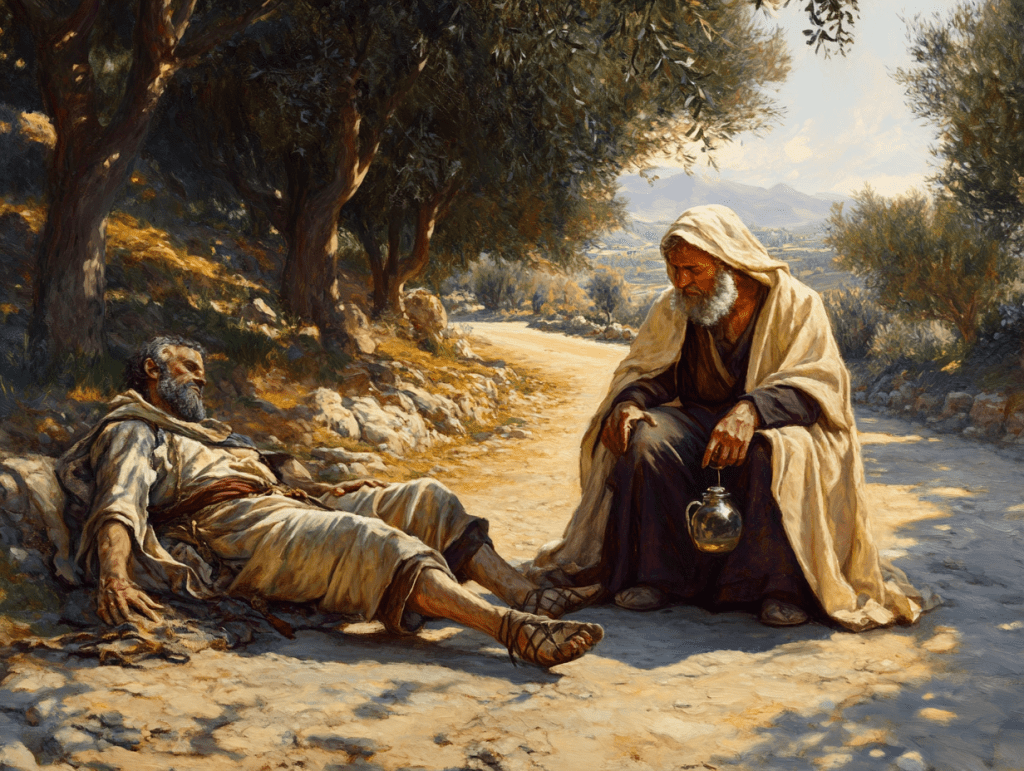
    In the 1st-century Judean setting of Luke 10, Jesus was teaching a crowd when a lawyer asked, “Teacher, what shall I do to inherit eternal life?” (Luke 10:25, ESV). Jesus pointed him to the law: love God and love your neighbor (Luke 10:27). When the lawyer asked, “And who is my neighbor?” (Luke 10:29), Jesus responded with the Parable of the Good Samaritan: A man traveling from Jerusalem to Jericho was attacked by robbers, left half-dead. A priest and a Levite passed by, but a Samaritan stopped, bandaged his wounds, and cared for him (Luke 10:30-35). In this context, Samaritans were despised by Jews due to historical and religious tensions (John 4:9), making the Samaritan’s compassion radical. Jesus concluded, “You go, and do likewise” (Luke 10:37, ESV), showing that love transcends boundaries and is the essence of Kingdom works. This aligns with Dual-Realm Dispensationalism, where love in the Kingdom of God now (Colossians 1:13) prepares us for the Kingdom of Heaven (Revelation 22:12). J. Dwight Pentecost writes, “The Good Samaritan exemplifies the love that marks Kingdom works, a love that endures the Bema Seat’s fire” (Things to Come, 1958, p. 145).1 The parable calls us to love our neighbor as a Spirit-led work, reflecting the Kingdom’s heart.

    The Samaritan’s Compassionate Works

    The Samaritan’s actions—bandaging wounds, providing oil and wine, and ensuring the man’s care—represent Spirit-led works of love that endure. On the Jericho road, a dangerous 17-mile stretch descending 3,000 feet from Jerusalem to Jericho, the Samaritan risked his safety to help a stranger. His compassion stood in stark contrast to the priest and Levite, who prioritized ritual purity over mercy. 1 Corinthians 13:13 declares, “So now faith, hope, and love abide, these three; but the greatest of these is love” (ESV). The Samaritan’s love was active, costly, and selfless, embodying the Spirit-led works that prepare us for the Kingdom of Heaven. In the 1st-century context, his actions were revolutionary, crossing cultural divides to show mercy. H.A. Ironside reflects, “The Samaritan’s love mirrors the heart of Christ, a love that acts without hesitation” (Luke, 1915, p. 89).2 His compassionate works challenge us to love actively, even when it’s inconvenient or costly, as a reflection of the Kingdom’s values.

    Practical Application: Loving in Action

    The Parable of the Good Samaritan calls us to love in action, showing compassion to those in need as a Spirit-led work. In our modern context, this means looking for opportunities to serve others, even when it’s inconvenient. Galatians 6:10 urges, “So then, as we have opportunity, let us do good to everyone, and especially to those who are of the household of faith” (ESV). Practically, this might look like helping a neighbor with groceries, offering a listening ear to a friend in distress, or supporting a local charity with your time or resources. For example, taking time to visit a sick relative or donating to a food bank can be acts of love that reflect the Kingdom’s heart. John Walvoord notes, “Love in action is the hallmark of Kingdom works, preparing us for eternal glory” (The Bible Knowledge Commentary, 1983, p. 234).3 Love in action—show compassion to others, building works that endure.

    More to Explore

    The Good Samaritan challenges us to love in action, reflecting the Kingdom’s heart. Our next post will explore readiness (Matthew 24:45-47) in the Kingdom of God now, preparing us for glory in the Kingdom of Heaven. Stay tuned—God’s Word holds treasures (2 Timothy 3:16), and for a deeper dive, look forward to Refined by Fire, a forthcoming book exploring these truths across 24 chapters, deepening your journey in the Kingdom of God and Heaven (Ephesians 2:10).

    Endnotes

    1. J. Dwight Pentecost, Things to Come (Grand Rapids: Zondervan, 1958), 142.
    2. H.A. Ironside, Expository Notes on the Gospel of Matthew (Neptune, NJ: Loizeaux Brothers, 1920), 146.
    3. Norman Geisler, Systematic Theology (Minneapolis: Bethany House, 2002), 683.

  • The Leaven: Hidden Influence

    The Leaven: Hidden Influence

    In our journey through Refined by Fire, we’ve explored the foundational role of faith in entering the Kingdom of God, as seen in parables like the Sower and the Mustard Seed (Posts 3 and 7). Now, as we revisit Part 1: Faith and the Kingdom of God, we turn to the Parable of the Leaven (Matthew 13:33), a subtle yet powerful illustration of the Kingdom’s transformative influence through faith. This parable, part of Jesus’ teachings in Matthew 13, reveals how the Kingdom of God works quietly but pervasively in the hearts of believers, shaping lives for eternity. Let’s unpack this hidden truth and discover how our faith can influence every part of our lives for God’s glory.

    The Transformative Power of the Kingdom

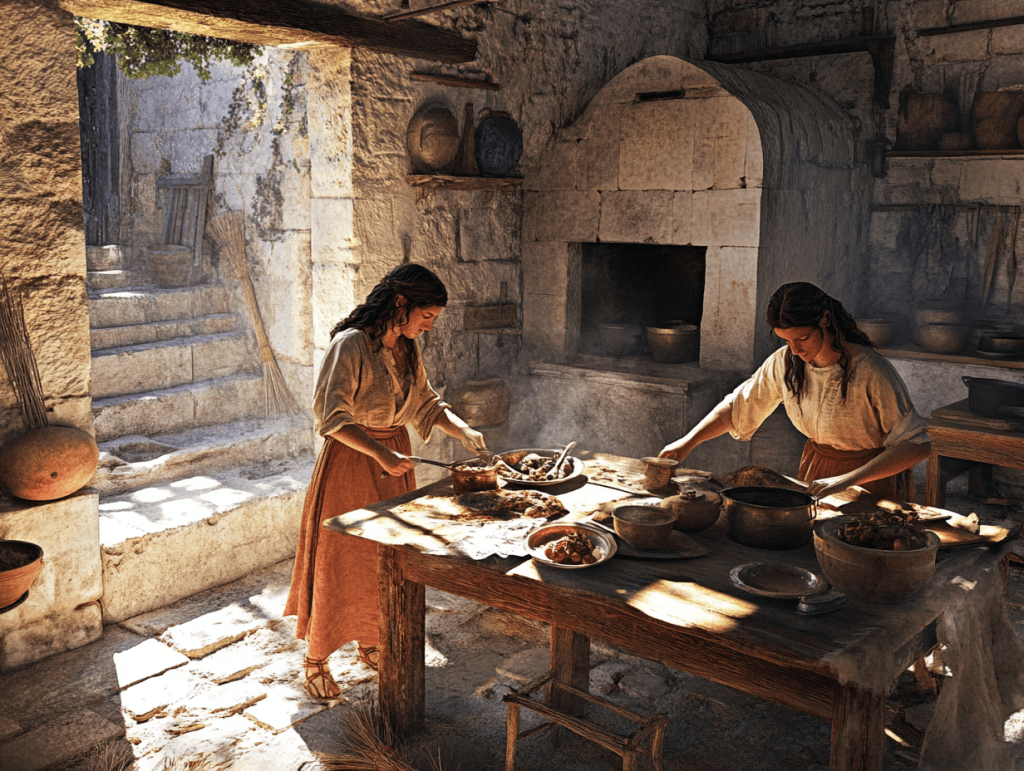
    In the 1st-century Galilean setting of Matthew 13, Jesus taught the crowds by the Sea of Galilee, using parables to reveal the mysteries of the Kingdom (Matthew 13:2, “And great crowds gathered about him, so that he got into a boat and sat down”). The Parable of the Leaven, though brief, carries profound meaning: “The kingdom of heaven is like leaven that a woman took and hid in three measures of flour, till it was all leavened” (Matthew 13:33, ESV). In this cultural context, leaven (yeast) was a common household item, used to make bread rise, but it worked slowly and invisibly, transforming the dough over time. Jesus uses this imagery to show how the Kingdom of God, through faith, permeates a believer’s life, quietly but powerfully changing them from within. The “three measures of flour” likely allude to a large quantity (about 50 pounds), emphasizing the Kingdom’s expansive influence—starting small but affecting everything. Arnold Fruchtenbaum notes, “The leaven represents the Kingdom’s subtle yet pervasive growth, a mystery hidden until revealed through Christ” (Israelology, 1994, p. 623).1 This aligns with Dual-Realm Dispensationalism, where the Kingdom of God operates now through faith (Colossians 1:13), preparing us for the Kingdom of Heaven (Revelation 20:6). The parable calls us to let faith transform every part of our lives, just as leaven transforms the dough.

    The Woman’s Hidden Work

    The woman in the parable, a 1st-century Galilean homemaker, represents the believer who receives the Kingdom’s influence through faith. Her act of hiding the leaven in the flour mirrors how faith often works quietly—through prayer, obedience, and trust in God’s Word—yet its impact is profound. In Galilee, where Jesus taught, daily life revolved around such tasks as baking bread, a process familiar to His audience. The woman’s work was not flashy but essential, much like the Spirit’s sanctifying work in us. John 4:24 reminds us, “God is spirit, and those who worship him must worship in spirit and truth” (ESV). Just as the leaven permeated the dough, our faith, empowered by the Spirit, should permeate our thoughts, actions, and relationships, transforming us into vessels for God’s glory. H.A. Ironside reflects, “The leaven of the Kingdom works silently, but its influence is unstoppable, shaping lives for eternity” (Matthew, 1920, p. 145).2 The woman’s hidden work challenges us to let faith influence every corner of our lives, even the unseen places.

    Practical Application: Transforming Through Faith

    The Parable of the Leaven calls us to let faith transform every aspect of our lives, just as leaven transforms the dough. In our modern context, this means allowing the Kingdom’s influence to shape our daily choices—how we treat others, how we steward our time, and how we worship. Galatians 5:22-23 describes the fruit of the Spirit: “But the fruit of the Spirit is love, joy, peace, patience, kindness, goodness, faithfulness, gentleness, self-control” (ESV). By cultivating these qualities through faith, we become agents of the Kingdom’s transformative power in our families, workplaces, and communities. For example, a kind word to a struggling coworker or a patient response in a tense situation can reflect the Kingdom’s influence, quietly transforming relationships. John Walvoord notes, “The Kingdom’s growth through faith is a mystery, but its impact is undeniable, shaping believers for eternity” (The Bible Knowledge Commentary, 1983, p. 48).3 Transform through faith—let your faith influence every part of your life, reflecting the Kingdom’s power.

    More to Explore

    The Leaven challenges us to let faith transform every part of our lives. Upcoming posts will explore how love (Luke 10:25-37) and readiness (Matthew 24:45-47) in the Kingdom of God now lead to glory in the Kingdom of Heaven. Stay tuned—God’s Word holds treasures (2 Timothy 3:16), and for a deeper dive, look forward to Refined by Fire, a forthcoming book exploring these truths across 24 chapters, deepening your journey in the Kingdom of God and Heaven (Ephesians 2:10).

    Endnotes

    1. Arnold Fruchtenbaum, Israelology: The Missing Link in Systematic Theology (Tustin, CA: Ariel Ministries, 1994), 623.
    2. H.A. Ironside, Expository Notes on the Gospel of Matthew (Neptune, NJ: Loizeaux Brothers, 1920), 145.
    3. John Walvoord, The Bible Knowledge Commentary: New Testament (Wheaton, IL: Victor Books, 1983), 48.

  • The Parable of the Sower: Faith’s Foundation

    A Sower in Galilee

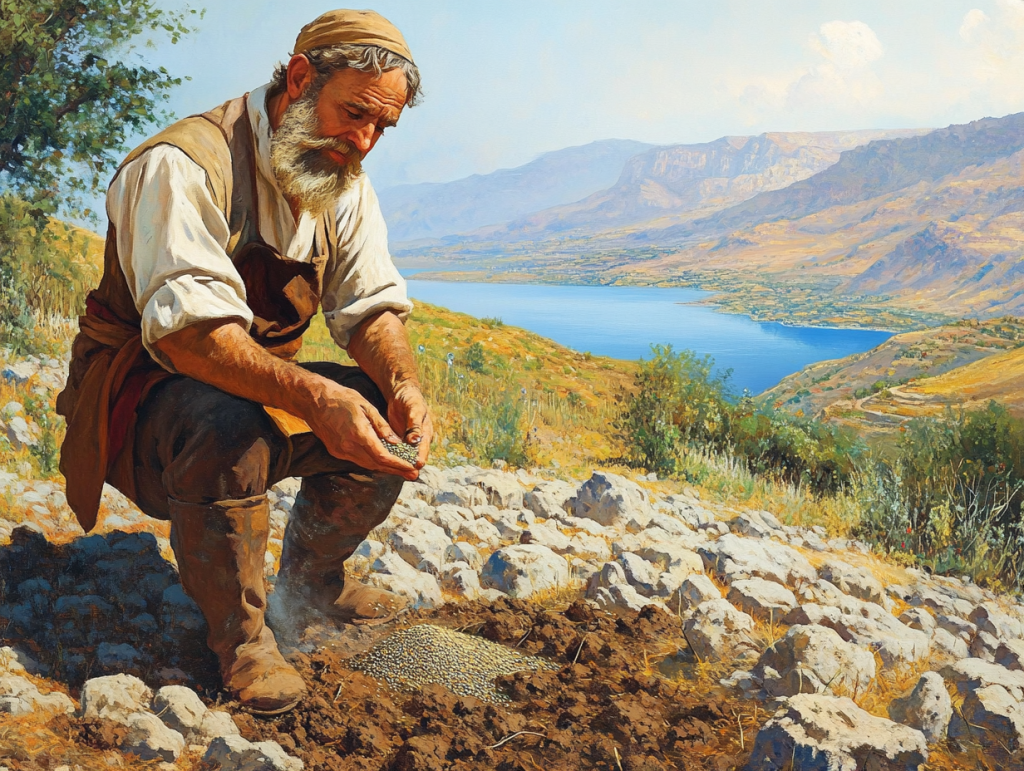
    In the bustling region of Galilee, a farmer walked through fields near Capernaum, scattering seeds with practiced hands (Matthew 13:3, “A sower went out to sow”). The Sea of Galilee glimmered nearby, its shores alive with fishermen and merchants, a fitting backdrop for Jesus’ teaching. Yet, the soils—rocky, thorny, fertile—revealed a deeper truth: not all hearts receive God’s Word equally. This parable, spoken to a crowd on the shore (Matthew 13:2), exposes human failure to heed the gospel, but Christ’s grace offers hope. Dual-Realm Dispensationalism unveils this Sod (סוֹד, Strong’s H5475: hidden secret), showing how faith plants us in the Kingdom of God now (Colossians 1:13, “transferred us to the kingdom of his beloved Son”), preparing us for the Kingdom of Heaven later (Revelation 20:6). Charles Ryrie notes, “The Sower parable underscores the varied responses to the gospel, a foundational truth for kingdom theology” (Dispensationalism, 2007, p. 112). Believe now—let the Word take root in fertile soil.

    The Seed and the Soils

    The sower’s seeds fell on four soils, each revealing a heart’s response to God’s Word (Matthew 13:4-8). The path, hardened by foot traffic, let birds snatch the seed—Satan stealing truth from unyielding hearts (Matthew 13:19). Rocky ground sprouted quickly but withered under the sun—shallow faith fading amid trials (Matthew 13:20-21). Thorny ground choked the seed with weeds—worldly cares stifling growth (Matthew 13:22). But the good soil yielded a harvest, thirty, sixty, a hundredfold—true faith bearing fruit (Matthew 13:23). Chuck Smith observes, “The good soil represents a heart prepared by the Spirit, ready to receive and act on God’s Word” (The Gospel of Matthew, 1982, p. 87). This parable teaches that entering the Kingdom of God requires a receptive heart (John 3:3, “unless one is born again he cannot see the kingdom of God”), a faith that endures.

    The Kingdom of God Now

    The good soil reflects faith that enters the Kingdom of God now (Colossians 1:13). This spiritual kingdom, accessed by grace through faith alone (Ephesians 2:8-9, “by grace you have been saved through faith”), is where believers live in the Church Age. The Sower’s harvest foreshadows the Kingdom of Heaven’s rewards (Matthew 25:21, “Well done, good and faithful servant”), but the focus here is present faith. Fruchtenbaum emphasizes, “The Kingdom of God is a present reality for those who believe, shaping their walk today” (Israelology, 1989, p. 321). A fertile heart yields fruit—righteousness, peace, joy in the Holy Spirit (Romans 14:17)—preparing us for future glory. Sow faithfully—let your faith grow deep roots in God’s kingdom today.

    The Centurion’s Faith

    A Roman centurion in Capernaum exemplified good soil (Matthew 8:5-13). Approaching Jesus, he sought healing for his servant, declaring, “Lord… only say the word, and my servant will be healed” (Matthew 8:8). His faith, rooted in humility and trust, amazed Jesus: “Truly, I tell you, with no one in Israel have I found such faith” (Matthew 8:10). Skip Heitzig reflects, “The centurion’s faith crossed cultural barriers, showing the universal reach of the Kingdom of God” (The Gospel of Matthew, 2005, p. 45). This faith entered the Kingdom of God now (John 3:16, “whoever believes in him should not perish”), a model for us. Trust fully—let your faith mirror his, unshaken by storms.

    The Rapture’s Connection

    The Sower’s harvest hints at the Rapture’s role in bridging the kingdoms (1 Thessalonians 4:17, “caught up together… to meet the Lord in the air”). Good soil yields fruit now, preparing believers for the Kingdom of Heaven’s rewards (Revelation 20:6). Tim LaHaye notes, “The Rapture separates the Church Age from the Tribulation, ushering us into Christ’s reign” (The Rapture, 2002, p. 67). The centurion’s faith foreshadows this hope—those who believe now will reign later (2 Timothy 2:12, “if we endure, we will also reign with him”). Prepare now—your faith today shapes your eternity tomorrow.

    More to Explore

    The Sower’s soils challenge us to examine our hearts—are we fertile ground for God’s Word? Upcoming posts will explore how Spirit-led works (Galatians 5:22-23) in the Kingdom of God now produce lasting fruit for the Kingdom of Heaven. Stay tuned—Scripture holds treasures (2 Timothy 3:16), waiting to be uncovered by faith.

  • Joseph’s Grain: Unveiling the Dual Realms

    The Hidden Grain

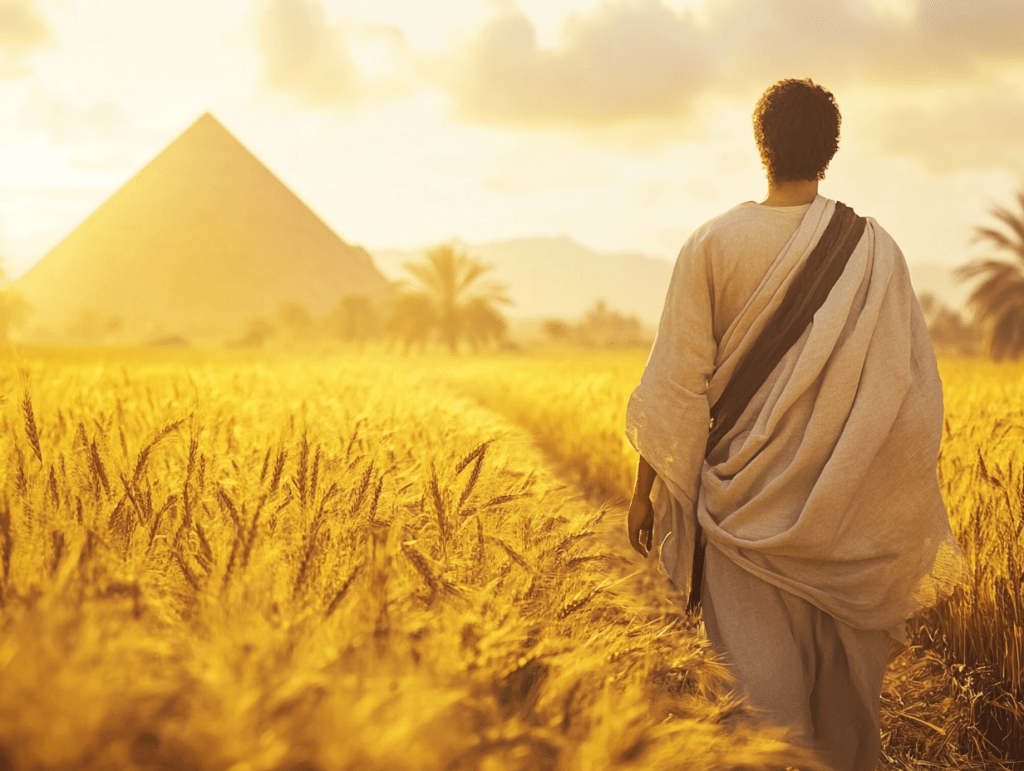
    Joseph’s provision (Genesis 45:7, “God sent me before you to preserve for you a remnant on earth, and to keep alive for you many survivors”) saved Israel during famine, a remarkable act of divine foresight. Yet, this is more than a survival tale—it’s a Sod (סוֹד, Strong’s H5475: “hidden secret” or “council”), a mystery embedded in Scripture, pointing to the Kingdom of Heaven’s bounty (Revelation 20:6, “they will reign with him for a thousand years”). Joseph’s grain ensured physical provision, but its deeper meaning unveils a future hope: the abundance of Christ’s millennial kingdom, where the saints inherit the earth (Matthew 25:34, “inherit the kingdom prepared for you”). This hidden depth, uncovered through Dual-Realm Dispensationalism, transforms a historical narrative into a prophetic signpost, revealing God’s layered plan.

    Dual-Realm Revelation

    The Kingdom of God (ἡ βασιλεία τοῦ Θεοῦ, Colossians 1:13, “transferred us to the kingdom of his beloved Son”) is a spiritual reality, entered now by faith—a realm where believers experience grace (Ephesians 2:8, “by grace you have been saved through faith”). This is the Church Age, where the gospel transforms lives across all nations (Matthew 28:19, “make disciples of all nations”). In contrast, the Kingdom of Heaven (ἡ βασιλεία τῶν οὐρανῶν, Matthew 5:3, “theirs is the kingdom of heaven”) awaits Christ’s physical reign after the Rapture and Tribulation, a kingdom where His rule is tangible (Revelation 20:4, “they came to life and reigned with Christ for a thousand years”). Joseph’s grain bridges these realms: his provision sustains God’s people now (Kingdom of God), while his story foreshadows their future inheritance (Kingdom of Heaven). Dual-Realm Dispensationalism, rooted in a literal hermeneutic (2 Timothy 2:15, “rightly handling the word of truth”), reveals this divine duality, challenging conflationist views that blur the distinction between these kingdoms.

    Arnold Fruchtenbaum, in Israelology: The Missing Link in Systematic Theology, emphasizes that such distinctions are critical. He argues that Israel’s role in God’s plan—past, present, and future—cannot be conflated with the Church’s, a principle that applies here. The Kingdom of God operates now through the Church, but the Kingdom of Heaven awaits Israel’s restoration, a future where Joseph’s legacy of provision finds its ultimate fulfillment. Fruchtenbaum’s dispensational lens highlights this separation, ensuring we don’t spiritualize away the physical promises to Israel (Romans 11:29, “the gifts and the calling of God are irrevocable”).

    Joseph’s Dreams: A Prophetic Window

    Joseph’s dreams (Genesis 37:7, “your sheaves gathered around and bowed down to my sheaf”) are more than sibling rivalry—they’re a Sod unveiled. The bowing sheaves prefigure his rise to power (Genesis 41:41, “he made him ruler over… all the land of Egypt”), mirroring Christ’s future reign. Charles Ryrie notes, “Prophetic types in the Old Testament often point to New Testament fulfillments” (Dispensationalism, 2007). This aligns with Daniel 7:27’s “the saints of the Most High shall receive the kingdom”, a Kingdom of Heaven promise. The dream’s imagery—grain, authority—echoes Revelation 20:4, where saints reign with Christ. Joseph’s second dream (Genesis 37:9, “the sun, the moon, and eleven stars were bowing down to me”) extends this, showing his family’s submission, a type of Israel’s future under Messiah (Zechariah 14:9, “the Lord will be king over all the earth”). These dreams, when viewed through a dual-realm lens, reveal God’s plan for both spiritual provision now and physical rulership later.

    Fruchtenbaum’s work underscores the importance of such typological interpretation. He argues that Israel’s history is replete with patterns (Israelology, 1989), like Joseph’s life, that point to future eschatological realities. This method avoids allegorizing scripture, instead letting the text speak literally—a cornerstone of dispensational theology.

    Historical Context and Spiritual Insight

    In ancient Egypt, grain was life—Joseph’s stewardship (Genesis 47:14, “Joseph gathered up all the money… and brought it into Pharaoh’s house”) ensured survival, a type of the Kingdom of God’s provision. His elevation at age thirty (Genesis 41:46, “Joseph was thirty years old when he entered the service of Pharaoh”) hints at the Kingdom of Heaven’s rulership, mirroring Christ’s public ministry beginning at thirty (Luke 3:23). Historians like Kenneth Kitchen (On the Reliability of the Old Testament, 2003) affirm Egypt’s grain economy, noting its role in sustaining the region during famines, supporting this typology. The seven years of plenty and famine (Genesis 41:29-30) also parallel prophetic cycles—seven years of Tribulation (Daniel 9:27) precede the Kingdom of Heaven’s abundance.

    Spiritually, Joseph’s faithfulness (Genesis 39:9, “how then can I do this great wickedness and sin against God?”) reflects the Kingdom of God’s call to righteousness (Romans 6:13, “yield yourselves to God”). His authority over Egypt foreshadows the Kingdom of Heaven’s rule, where Christ’s dominion is universal (Revelation 11:15, “the kingdom of the world has become the kingdom of our Lord”). Dual-Realm Dispensationalism sees this not as allegory but as literal foreshadowing—every detail a thread in God’s tapestry.

    The Rapture’s Bridge

    Joseph’s story bridges the realms—his preservation now (Kingdom of God) and his reign later (Kingdom of Heaven) parallel the Rapture. 1 Thessalonians 4:17 (“caught up together… to meet the Lord in the air”) separates the Church Age from the Tribulation, leading to the millennial kingdom. Joseph’s ascent from prison to power (Genesis 41:14, “they brought him quickly out of the dungeon”) mirrors this transition—a sudden elevation after suffering, much like the Church’s rapture before the Tribulation (Revelation 3:10, “I will keep you from the hour of trial”). Fruchtenbaum notes that dispensationalism’s strength lies in maintaining such distinctions (Israelology, 1989), ensuring the Rapture isn’t conflated with the Second Coming, a key dual-realm insight.

    This bridge also ties to Israel’s future. Joseph’s reconciliation with his brothers (Genesis 45:4, “I am your brother, Joseph, whom you sold into Egypt”) prefigures Israel’s restoration (Romans 11:26, “all Israel will be saved”). The grain he stored becomes a type of provision during the Tribulation, where Israel endures until Christ’s return (Zechariah 12:10, “they will look on me, on him whom they have pierced”). More essays will explore this Sod, revealing how the Rapture unlocks the dual-realm mystery.

    More to Uncover

    This exploration merely opens the door. Dual-Realm Dispensationalism invites us into Scripture’s deeper meanings—grace now, glory later (1 Corinthians 3:11-15, “each one’s work will be revealed by fire”). Upcoming essays will delve into Joseph’s dreams’ prophetic layers, Matthew’s parables (Matthew 13:44, “the kingdom of heaven is like treasure hidden in a field”), and the Rapture’s timing, each a Sod (סוֹד, Strong’s H5475: hidden secret) of God’s Word. We’ll explore how Joseph’s life intersects with Israel’s covenants (Genesis 15:18, “to your offspring I give this land”), a theme Fruchtenbaum highlights as central to dispensational theology. Stay tuned—every verse holds a treasure (2 Timothy 3:16, “All Scripture is breathed out by God”), waiting to be uncovered by faith.