Tag: Norman Geisler

  • The Good Samaritan: Love in Action

    Introduction

    Our journey through Refined by Fire has shown us the transformative power of faith (Post 8) and the sacrificial works required to seek the Kingdom (Post 9). Now, we continue in Part 2: Spirit-Led Works in This Age, turning to the Parable of the Good Samaritan (Luke 10:25-37), a timeless lesson on love as a Spirit-led work that endures. Jesus shared this parable in response to a lawyer’s question about eternal life, revealing that love for God and neighbor is the heart of Kingdom works. As we explore this story, we’ll see how acts of compassion in the Kingdom of God now prepare us for the glory of the Kingdom of Heaven, fulfilling the call to love in action.

    The Call to Love Your Neighbor

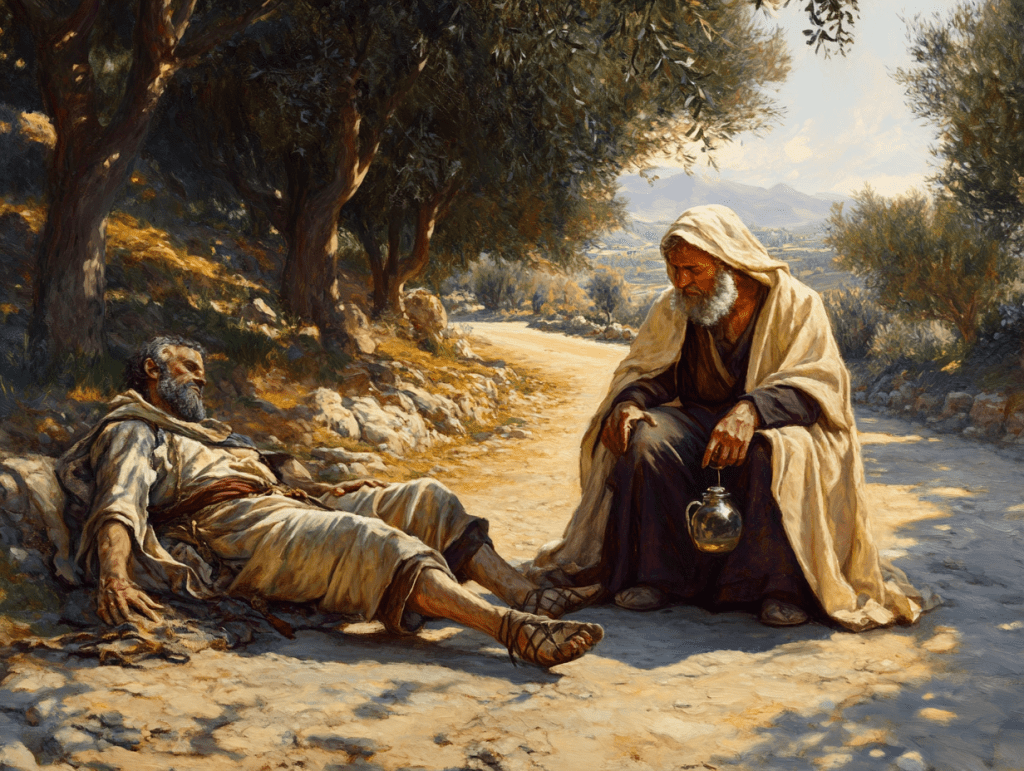
    In the 1st-century Judean setting of Luke 10, Jesus was teaching a crowd when a lawyer asked, “Teacher, what shall I do to inherit eternal life?” (Luke 10:25, ESV). Jesus pointed him to the law: love God and love your neighbor (Luke 10:27). When the lawyer asked, “And who is my neighbor?” (Luke 10:29), Jesus responded with the Parable of the Good Samaritan: A man traveling from Jerusalem to Jericho was attacked by robbers, left half-dead. A priest and a Levite passed by, but a Samaritan stopped, bandaged his wounds, and cared for him (Luke 10:30-35). In this context, Samaritans were despised by Jews due to historical and religious tensions (John 4:9), making the Samaritan’s compassion radical. Jesus concluded, “You go, and do likewise” (Luke 10:37, ESV), showing that love transcends boundaries and is the essence of Kingdom works. This aligns with Dual-Realm Dispensationalism, where love in the Kingdom of God now (Colossians 1:13) prepares us for the Kingdom of Heaven (Revelation 22:12). J. Dwight Pentecost writes, “The Good Samaritan exemplifies the love that marks Kingdom works, a love that endures the Bema Seat’s fire” (Things to Come, 1958, p. 145).1 The parable calls us to love our neighbor as a Spirit-led work, reflecting the Kingdom’s heart.

    The Samaritan’s Compassionate Works

    The Samaritan’s actions—bandaging wounds, providing oil and wine, and ensuring the man’s care—represent Spirit-led works of love that endure. On the Jericho road, a dangerous 17-mile stretch descending 3,000 feet from Jerusalem to Jericho, the Samaritan risked his safety to help a stranger. His compassion stood in stark contrast to the priest and Levite, who prioritized ritual purity over mercy. 1 Corinthians 13:13 declares, “So now faith, hope, and love abide, these three; but the greatest of these is love” (ESV). The Samaritan’s love was active, costly, and selfless, embodying the Spirit-led works that prepare us for the Kingdom of Heaven. In the 1st-century context, his actions were revolutionary, crossing cultural divides to show mercy. H.A. Ironside reflects, “The Samaritan’s love mirrors the heart of Christ, a love that acts without hesitation” (Luke, 1915, p. 89).2 His compassionate works challenge us to love actively, even when it’s inconvenient or costly, as a reflection of the Kingdom’s values.

    Practical Application: Loving in Action

    The Parable of the Good Samaritan calls us to love in action, showing compassion to those in need as a Spirit-led work. In our modern context, this means looking for opportunities to serve others, even when it’s inconvenient. Galatians 6:10 urges, “So then, as we have opportunity, let us do good to everyone, and especially to those who are of the household of faith” (ESV). Practically, this might look like helping a neighbor with groceries, offering a listening ear to a friend in distress, or supporting a local charity with your time or resources. For example, taking time to visit a sick relative or donating to a food bank can be acts of love that reflect the Kingdom’s heart. John Walvoord notes, “Love in action is the hallmark of Kingdom works, preparing us for eternal glory” (The Bible Knowledge Commentary, 1983, p. 234).3 Love in action—show compassion to others, building works that endure.

    More to Explore

    The Good Samaritan challenges us to love in action, reflecting the Kingdom’s heart. Our next post will explore readiness (Matthew 24:45-47) in the Kingdom of God now, preparing us for glory in the Kingdom of Heaven. Stay tuned—God’s Word holds treasures (2 Timothy 3:16), and for a deeper dive, look forward to Refined by Fire, a forthcoming book exploring these truths across 24 chapters, deepening your journey in the Kingdom of God and Heaven (Ephesians 2:10).

    Endnotes

    1. J. Dwight Pentecost, Things to Come (Grand Rapids: Zondervan, 1958), 142.
    2. H.A. Ironside, Expository Notes on the Gospel of Matthew (Neptune, NJ: Loizeaux Brothers, 1920), 146.
    3. Norman Geisler, Systematic Theology (Minneapolis: Bethany House, 2002), 683.
  • Uncovering the Hidden Treasure

    Introduction

    As we continue our journey through Refined by Fire, we’ve seen how faith transforms us, much like the leaven in the Kingdom of God (Post 8). Now, we return to Part 2: Spirit-Led Works in This Age, exploring how our works in the Kingdom of God now prepare us for the Kingdom of Heaven. The Parable of the Hidden Treasure (Matthew 13:44), another gem from Jesus’ teachings in Matthew 13, reveals the incomparable value of the Kingdom and the sacrificial works required to pursue it. This parable challenges us to prioritize the Kingdom above all else, giving everything to gain its eternal rewards. Let’s dive into this hidden treasure and discover how our Spirit-led works can reflect a heart fully devoted to God’s Kingdom.

    The Value of the Kingdom

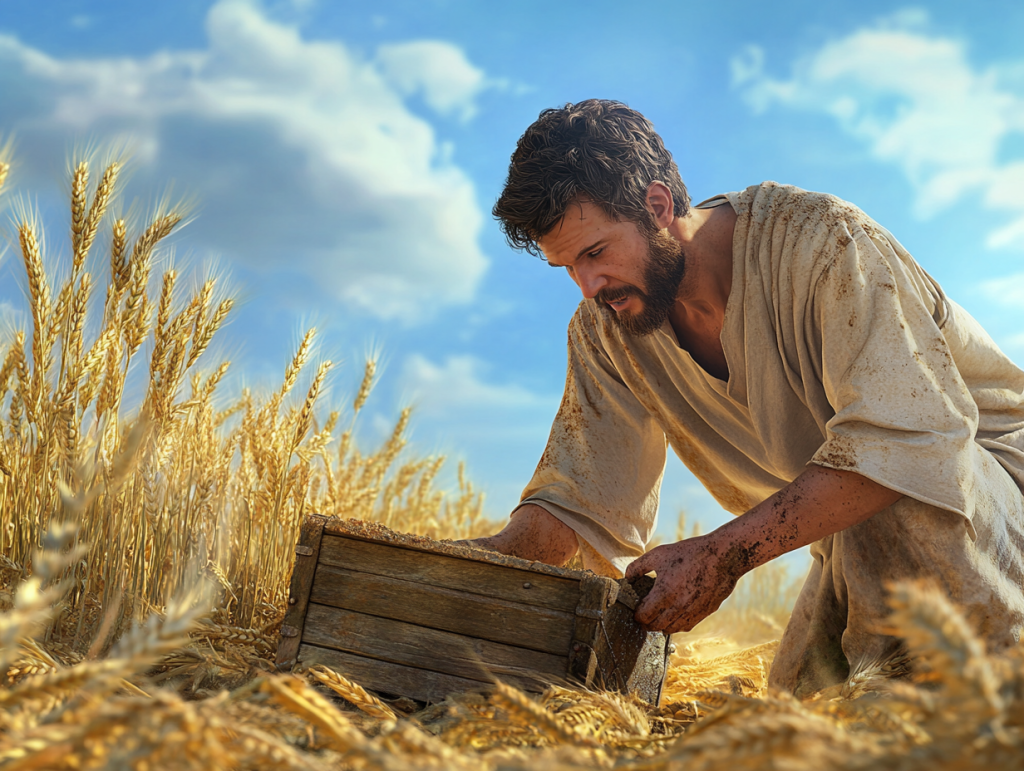
    In the 1st-century Galilean context of Matthew 13, Jesus taught the crowds by the Sea of Galilee, using parables to unveil the mysteries of the Kingdom (Matthew 13:2, “And great crowds gathered about him, so that he got into a boat and sat down”). The Parable of the Hidden Treasure is strikingly concise yet profound: “The kingdom of heaven is like treasure hidden in a field, which a man found and covered up. Then in his joy he goes and sells all that he has and buys that field” (Matthew 13:44, ESV). In this agrarian society, fields were often places where treasures—coins, jewelry, or family heirlooms—were buried for safekeeping, especially during times of war or upheaval. The man in the parable, likely a laborer or tenant farmer, stumbles upon such a treasure while working the land. Recognizing its immense value, he joyfully sells all he has to buy the field, securing the treasure for himself. Jesus uses this imagery to show the surpassing worth of the Kingdom of Heaven—it’s a treasure so valuable that it’s worth giving up everything to obtain. This aligns with Dual-Realm Dispensationalism, where our works in the Kingdom of God now (Colossians 1:13) prepare us for the eternal rewards of the Kingdom of Heaven (Revelation 22:12). J. Dwight Pentecost writes, “The Kingdom of Heaven is a treasure worth more than all earthly possessions, a prize that demands our all” (Things to Come, 1958, p. 142).1 The parable calls us to recognize the Kingdom’s value and pursue it with wholehearted devotion.

    The Man’s Joyful Sacrifice

    The man in the parable represents the believer who discovers the Kingdom’s worth and responds with joyful sacrifice. His actions—selling all he has to buy the field—reflect a radical commitment to the Kingdom, driven not by obligation but by joy. In 1st-century Galilee, selling all one’s possessions was a significant act, often leaving a person with nothing but the field they purchased. Yet the man does so “in his joy”, showing that the treasure’s value far outweighs the cost. This mirrors the Spirit-led works we’re called to in the Kingdom of God now—works of sacrifice, service, and devotion that prepare us for the Kingdom of Heaven. Matthew 6:33 instructs us, “But seek first the kingdom of God and his righteousness, and all these things will be added to you” (ESV). The man’s joyful sacrifice challenges us to prioritize the Kingdom above all else, trusting that God will provide for our needs. H.A. Ironside notes, “The joy of the Kingdom’s discovery leads to a willing surrender of all, for its value is eternal” (Matthew, 1920, p. 146).2 Like the man, we’re called to let the Spirit guide our works, sacrificing earthly comforts for the eternal treasure of the Kingdom.

    Practical Application: Seeking the Kingdom Through Works

    The Parable of the Hidden Treasure calls us to seek the Kingdom through Spirit-led works, prioritizing its eternal value above all else. In our modern context, this means reorienting our lives—our time, resources, and priorities—around the Kingdom. Philippians 3:8 captures this mindset: “Indeed, I count everything as loss because of the surpassing worth of knowing Christ Jesus my Lord” (ESV). Practically, this might look like giving generously to support a ministry, even when it stretches your budget, or dedicating time to serve others, even when it means sacrificing personal comfort. For example, volunteering at a local shelter or mentoring a young believer can be acts of joyful sacrifice, reflecting a heart that values the Kingdom above all. Norman Geisler writes, “The Kingdom’s worth demands our all, for its rewards are eternal” (Systematic Theology, 2002, p. 683).3 Seek the treasure—prioritize the Kingdom, sacrificing all for its eternal value.

    More to Explore

    The Hidden Treasure challenges us to seek the Kingdom through sacrificial works. Our next post will explore how love (Luke 10:25-37) in the Kingdom of God now leads to glory in the Kingdom of Heaven, followed by a focus on readiness (Matthew 24:45-47). Stay tuned—God’s Word holds treasures (2 Timothy 3:16), and for a deeper dive, look forward to Refined by Fire, a forthcoming book exploring these truths across 24 chapters, deepening your journey in the Kingdom of God and Heaven (Ephesians 2:10).

    Endnotes

    1. J. Dwight Pentecost, Things to Come (Grand Rapids: Zondervan, 1958), 142.
    2. H.A. Ironside, Expository Notes on the Gospel of Matthew (Neptune, NJ: Loizeaux Brothers, 1920), 146.
    3. Norman Geisler, Systematic Theology (Minneapolis: Bethany House, 2002), 683.