Tag: Works

  • The Wheat and Tares: Judgment’s Preview

    A Field in Judea

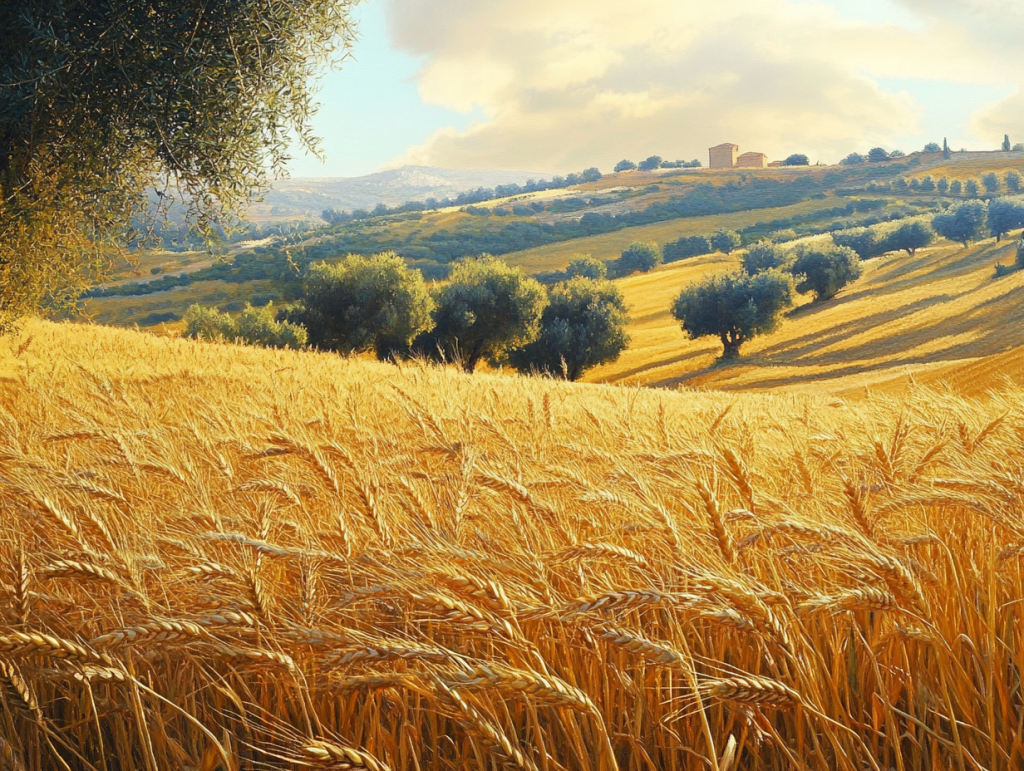
    In a sunlit Judean field, wheat and tares grew side by side, their roots entwined beneath the soil (Matthew 13:24, “The kingdom of heaven may be compared to a man who sowed good seed in his field”). The rolling hills of Judea, dotted with olive groves as noted by Josephus (Antiquities of the Jews, Book 15), framed this scene—a fitting setting for Jesus’ teaching near Capernaum. Yet, an enemy sowed tares, revealing human failure to discern good from evil. Christ’s parable offers hope through judgment. Dual-Realm Dispensationalism unveils this Sod (סוֹד, Strong’s H5475: hidden secret), linking works in the Kingdom of God now (Colossians 1:13, “transferred us to the kingdom of his beloved Son”) to the Judgment Seat of Christ (1 Corinthians 3:13), shaping our role in the Kingdom of Heaven (Revelation 20:6). John Walvoord writes, “The Wheat and Tares preview the separation of true and false at the end of the age” (Matthew: Thy Kingdom Come, 1974, p. 98). Discern wisely—your works face God’s fire.

    The Sower and the Enemy

    The sower planted good seed, but an enemy sowed tares (Matthew 13:25). When the plants grew, servants asked, “Did you not sow good seed in your field?” (Matthew 13:27). The master replied, “An enemy has done this… let both grow together until the harvest” (Matthew 13:28-30). The harvest separates wheat (righteous) from tares (wicked), reflecting the Bema Seat (1 Corinthians 3:12-15, “the fire will test what sort of work each one has done”). David Guzik notes, “The tares mimic wheat, but their fruit reveals their nature at judgment” (Matthew Commentary, 2013, p. 54). This parable warns that works in the Kingdom of God now determine rewards in the Kingdom of Heaven later. Work faithfully—bear fruit that endures.

    The Kingdom of God Now

    The Kingdom of God, accessed by faith (Ephesians 2:8-9, “by grace you have been saved through faith”), calls believers to works reflecting Christ (Colossians 1:10, “bearing fruit in every good work”). The wheat symbolizes Spirit-led works—gold, silver, precious stones—that endure (1 Corinthians 3:12). The tares, works of the flesh, perish (Matthew 13:30, “gather the weeds… to be burned”). Fruchtenbaum teaches, “Works reveal the heart—only Spirit-led deeds survive God’s judgment” (Israelology, 1989, p. 456). Live righteously—let your works shine as wheat in God’s harvest.

    The Faithful Servants

    Two servants in a Judean household exemplified enduring works (Matthew 24:45-47). The faithful servant, tasked with feeding others, was diligent, earning, “Blessed is that servant… he will set him over all his possessions” (Matthew 24:46-47). Chuck Smith reflects, “Faithful service in small things leads to greater reward” (The Gospel of Matthew, 1982, p. 134). Their works, like the wheat, endure (1 Corinthians 3:14, “if the work… survives, he will receive a reward”). Serve diligently—your faithfulness now shapes your eternity.

    Preparing for the Bema Seat

    The harvest points to the Bema Seat, where works are judged (2 Corinthians 5:10, “we must all appear before the judgment seat of Christ”). Wheat endures, tares burn—Spirit-led works gain reward (1 Corinthians 3:14), while fleshly works face loss (1 Corinthians 3:15, “he will suffer loss, though he himself will be saved”). Tim LaHaye writes, “The Bema Seat evaluates our works, not our salvation, for the Kingdom of Heaven” (The Rapture, 2002, p. 89). This prepares us for reigning with Christ (Revelation 20:4). Prepare now—let your works be wheat, not tares.

    More to Explore

    The Wheat and Tares challenge us—are our works wheat or tares? Upcoming posts will explore how love (Luke 10:25-37) and perseverance (Hebrews 12:1) in the Kingdom of God now secure our place in the Kingdom of Heaven. Stay tuned—God’s Word holds treasures (2 Timothy 3:16), and for a deeper dive, look forward to Refined by Fire, a forthcoming book exploring these truths across 24 chapters, deepening your journey in the Kingdom of God and Heaven (Ephesians 2:10).
  • The Talents: Works That Endure

    A Servant in Judea

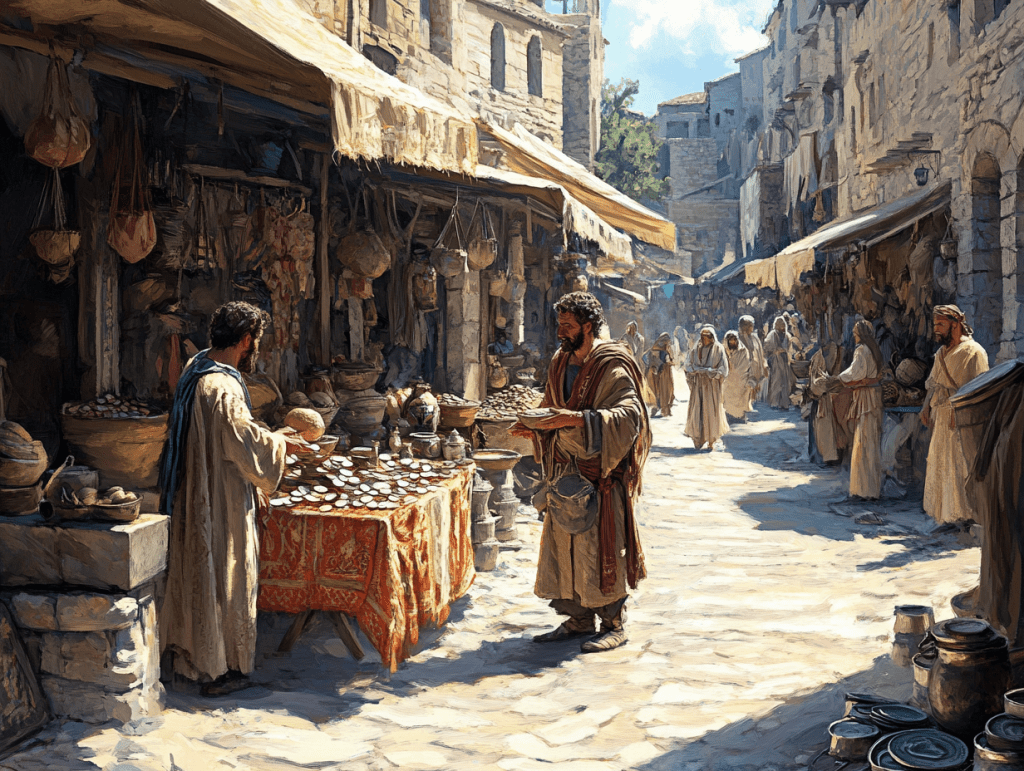
    In the bustling markets of Judea, a servant handled talents—large sums of silver—under the watchful eye of his master (Matthew 25:14, “a man going on a journey… entrusted to his servants”). Jerusalem’s streets echoed with trade, its stone walls reflecting the economic pulse of the region, as recorded by Josephus (Antiquities of the Jews, Book 18). Yet, this servant faced a choice: invest or hide. Human failure to act reveals fear or laziness, but Christ’s parable offers redemption through faithful stewardship. Dual-Realm Dispensationalism uncovers this Sod (סוֹד, Strong’s H5475: hidden secret), linking works in the Kingdom of God now (Colossians 1:13, “transferred us to the kingdom of his beloved Son”) to rewards in the Kingdom of Heaven later (Revelation 20:6). J. Dwight Pentecost writes, “The Talents teach that faithfulness today determines eternal gain” (Things to Come, 1958, p. 234). Steward well—your works matter for eternity.

    The Master’s Trust

    The master entrusted talents to three servants, each according to ability (Matthew 25:15). Two traded wisely, doubling their sums (Matthew 25:16-17), while the third buried his, fearing loss (Matthew 25:18). The faithful heard, “Well done, good and faithful servant… enter into the joy of your master” (Matthew 25:21), but the unfaithful faced, “cast the worthless servant into the outer darkness” (Matthew 25:30). This reflects the Judgment Seat of Christ (1 Corinthians 3:12-15), where Spirit-led works (gold, silver, precious stones) endure, while fleshly works (wood, hay, stubble) perish. John Walvoord notes, “The talents symbolize the responsibilities given to believers, judged for their faithfulness” (The Bible Knowledge Commentary, 1983, p. 77). Invest boldly—use your gifts for God’s glory.

    Works in the Kingdom of God

    The Kingdom of God, a spiritual realm accessed by faith (Ephesians 2:8-9, “by grace you have been saved through faith”), calls believers to works that reflect Christ (Colossians 1:10, “bearing fruit in every good work”). The two faithful servants’ efforts mirror this—Spirit-led labor in the Church Age prepares us for the Kingdom of Heaven (Matthew 25:21). Fruchtenbaum teaches, “Works flow from salvation, not toward it, shaping our eternal role” (Israelology, 1989, p. 456). These works, empowered by the Holy Spirit (Galatians 5:22-23, “love, joy, peace”), endure God’s fire (1 Corinthians 3:13), securing rewards. Serve diligently—let your actions honor God today.

    The Widow’s Offering

    A widow in Jerusalem exemplified enduring works (Mark 12:41-44). She gave two small coins, “all she had to live on” (Mark 12:44), out of love and faith. Jesus praised her, contrasting her sacrifice with the rich’s show (Mark 12:43). Greg Laurie reflects, “Her offering was a work of the heart, pleasing to God beyond measure” (The Gospel of Mark, 2017, p. 102). This aligns with the Talents—small acts, when Spirit-led, build eternal treasure (Matthew 6:20, “lay up for yourselves treasures in heaven”). Give generously—your faithfulness echoes hers.

    Preparing for the Bema Seat

    The Talents point to the Bema Seat, where works are judged (2 Corinthians 5:10, “we must all appear before the judgment seat of Christ”). The faithful servants’ gains reflect gold and silver (1 Corinthians 3:12), earning, “you have been faithful over a little… over much” (Matthew 25:23). The unfaithful’s loss mirrors wood and stubble, facing outer darkness—a loss of reward, not salvation (Matthew 25:30). Tim LaHaye writes, “The Bema Seat separates the saved by faith from the rewarded by works” (The Rapture, 2002, p. 89). This prepares us for the Kingdom of Heaven (Revelation 20:4), where overcomers reign. Prepare now—your works today shape your tomorrow.

    More to Explore

    The Talents challenge us to steward our gifts—are we investing for eternity? Upcoming posts will explore how love (Matthew 22:37-39) and perseverance (Hebrews 12:1) in the Kingdom of God now secure our place in the Kingdom of Heaven. Stay tuned—God’s Word holds treasures (2 Timothy 3:16).